
I know what you’re thinking. Not magic mushrooms. Honestly, I don’t touch anything. I am this way by nature, as God made me. No, today, I took a trip out to Kennett Square, Pennsylvania, the self-proclaimed “Mushroom Capital of the World.” And for very good reason. I went to contribute something to the sorry state of the narrative about immigration in the United States, especially the one retailed by Trump and that crypto-Nazi Stephen Miller. You know, immigration bad. Job killer. Creates crime. Not their best people. All that crap. As someone who comes from an immigrant family, I find this tripe unusually disgusting, even coming from a group of halfwits like Trump and the Boyz.
Now, ordinarily, the approach to this is either some airy-fairy economic theory that basically boils down to free trade never hurt anyone. Well, I don’t entirely believe that, but this is going somewhere else. I want to talk about jobs, loss of industries, stuff like that. For sure, I subscribe to the Sermon on the Mount. You know, Matthew 5:3-10. In fact, I pretty much think of the 10 commandments as boilerplate, because very few of us are going to murder, steal, commit adultery or worship false Gods (your statue of Donald Trump is your problem, kiddo). But this stuff about being, meek, merciful, pure in heart (!) is pretty tough stuff to do on a daily basis. But that’s what the Man said. So, for Heaven’s sake, how can you subscribe to the hate-filled trash that Trump and his minions spill and follow the teaching of Christ? It comes down to that, you know. The Villanova Pope (had to get that in) basically justifies his stance on what these awful people in the Republican Party practice by saying, yo, what would Jesus say? Well, we all all know what he said. So let’s stop screwing around, ok? No one needs their intelligence insulted, especially Jesus Christ.
But, let’s face it, it may be consul of perfection to respond to spiritual incentives, but, like a favorite Capitalist once said: “People work for money.” Yup. That’s true. And as a sometimes Econ, I tend to favor down-to-Earth explanations of what the effects of various immigration and trade policies are. But, not just in theory. I want to point to one industry in the United States that has been arguably saved by immigration: the mushroom industry. And the city of Kennett Square. Today, I was there. I last passed that way probably in 1969 or so, and what I saw then was remarkably different. And unlike all the usual narratives about how it was always better in the past, this one was the reverse. I thought Kennett Square was a dump and a lot of the green houses and structures were literally falling apart. In my mind’s eye, I can see all the broken glass that was there half a century ago. Today? Ho boy? Thriving. Lovely. a kind of postcard for what almost-rural Pennsylvania should be. And, frankly, the Mexicans did it, or contributed substantially to it. If you don’t like what I am about to argue, you can leave now. And don’t let the door hit you on the way out.
A few caveats. I am not a specialist on the subject of the mushroom industry in Pennsylvania, which, I believe is the largest source of output in the United States. I am not a specialist in the history of Pennsylvania, much less Chester County, where Kennett Squares is located. Nor, really, am I an authority on Mexican immigration to the United States, or the various legal regimes to which is has been subject. So take it all with a grain of salt. Except the larger point. No Mexicans. No Mushrooms.
First of all, in Pennsylvania, at least, mushrooms are big business. According to the USDA (unless that creep Musk has managed to eliminated that department too), Pennsylvania accounts of 69 percent of button mushroom sales volume in the United States. The direct value of sales in $534 million, and the estimated Toal impact (some kind of multiplier around 2 must be assumed, which is standard) is $1.1 to $1.2 billion. That is of the same order as the Philadelphia Phillies professional baseball team generates in total spending. So, if you say, who cares about mushrooms, I’ll counter who cares about the Phillies? Maybe we should change their name to the Shiitake Sluggers. We already have the Iron Pigs in Triple AAA.
You can’t imagine Philly without the Phillies? Well, I can’t imagine pizza without mushrooms, so shut up.
The local folklore attributes the origins of the industry in Pennsylvania to the Quakers. Sounds good. It would be be better if it were the Lenni Lenape, but you can’t have everything, can you? By the time you get to something vaguely contemporary, you have a large number of Italian immigrants settling up in the business in the 20th century, some of whom are still at it today. I mean, who better. After all, Isn’t your opinion of Italian immigrants really “keep ’em in the dark and feed ’em shit.” No? Well, thanks. And the line is courtesy of The Departed. Anyway, at one point, I guess an economist would characterize the structure of the industry in Pennsylvania as “competitive,” meaning lots of small producers (hundreds, if not thousands, I think) who basically produced what market prices and their costs of production told them to do. Casual observation of the newer farms suggests that it is no longer the case, because they look capital intensive and fairly substantial. It’s taken a long time for the industry to shake out, it is more heavily regulated now than it was even in the not too distant past, and efficient scale is considerably larger. If you really want some Econ 1 diagram for this, let me know, but my guess is that you’ll take it all on faith. Like my students used to do. Whatever. Today the farms must be some form of imperfect competition, which means they have some control over pricing, if only because of product differentiation. We’ll let it go at that.
Now, it’s been at least forty years since I passed through Kennett Square, probably some time in the early 1970s or late 1960s. I have to tell you it did not present the picture of a rural pastorale that it does today. If fact, my distinct recollection is that a lot of the mushroom farms looked pretty crappy, broken down, with busted windows and neglected outbuildings. This is not what I remember. This is today
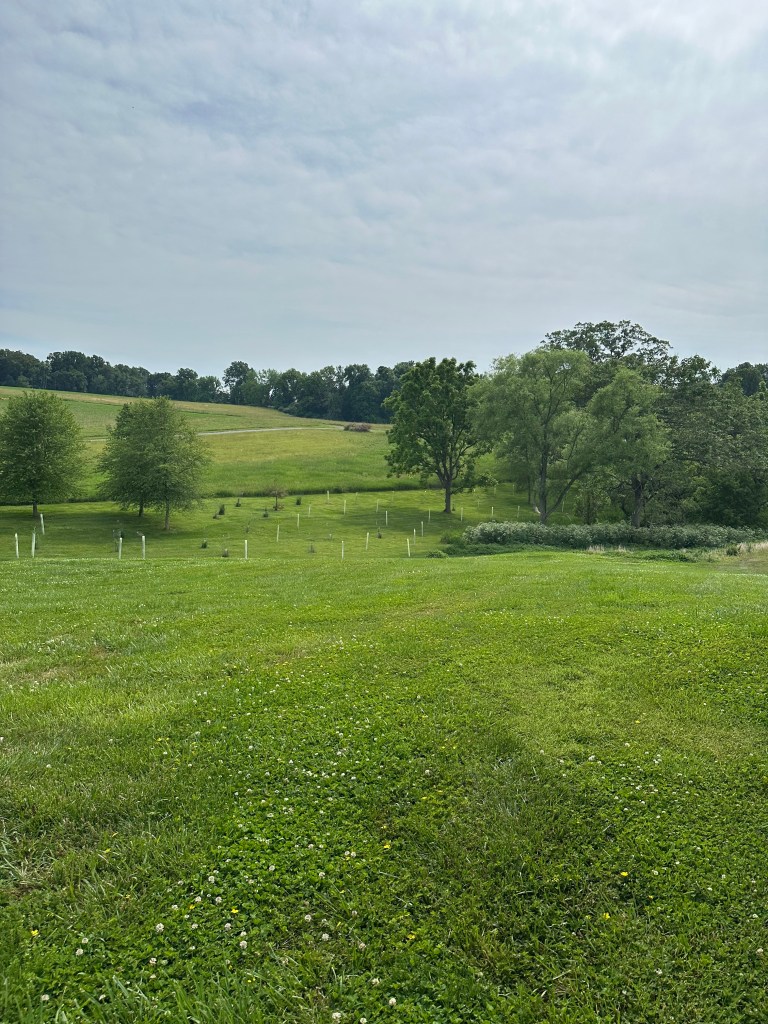

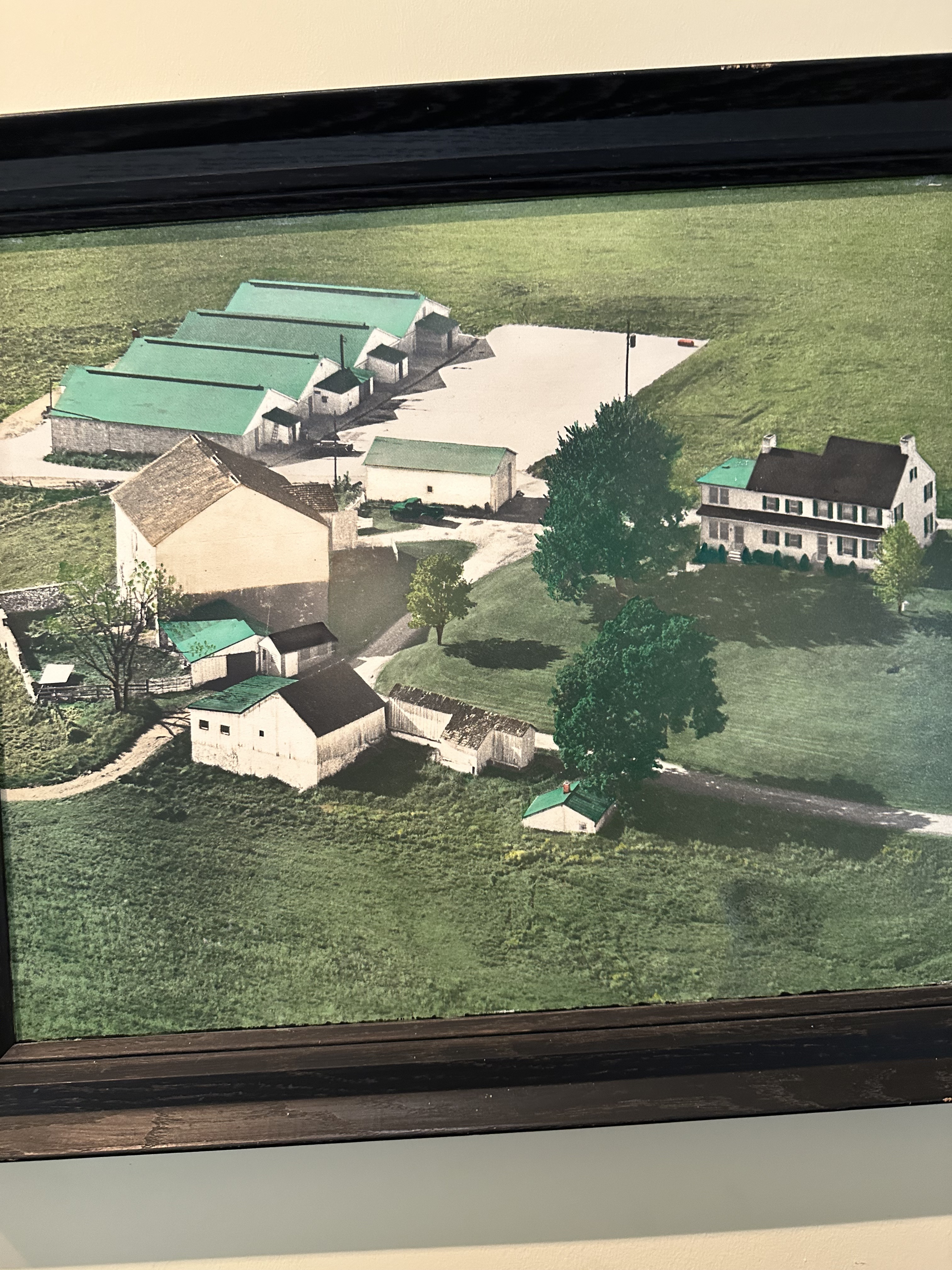
The town of Kennett Square looks like any upscale tourist attraction, with plenty of attractive residences, good restaurants, and those indefinable things that tell you “we’ll be happy to take your money.” The signs around the high school congratulate the class of 2026. In Spanish. I know of only one ICE raid there in the past year. It seems awfully tranquil and prosperous for a crime-ridden town whose principal industry is populated by “their worst” And, yeah, 68 percent of the mushroom industry’s labor force is Mexican–either immigrant or legally resident, or assimilated. If I don’t miss my guess, not to many of the kids born into Mexican families aspire to work in the mushroom industry. Sort of like the children of Italian Americans in South Philly get away from selling fruits and vegetables as soon as they can. That’s why Giordano’s at 9th and Washington, the flagship greengrocer of Ninth Street, is gone. Yeah, the kids–like Jerry Giordano– went to med school and stuff. Long gone, living in Arizona, I think.
See, working in mushrooms is no fun. It’s dirty, smelly, backbreaking, gritty–all those things that you really wouldn’t want your kids to aspire to. But for families from Michoacán in Mexico (a major feeder to Kennett Square, as the restaurant “La Michoacana,” this kind of employment may be dreadful, but it is better than what they have at home, not to mention there are no carteles operating in Kennett Square. In fact, which do you think is one of the fastest growing, most prosperous districts in Chester County? Kennett Square, which is growing at nearly 3 percent per year. Meanwhile older areas like Easttown and Tredyffrin are actually losing population. Boy, them Mexicans must be doing something right, because population is up, production in up. The median household income is over $80,000. The poverty rate is 5.3 percent. How’s that stack up against Philadelphia? You don’t want to know, believe me ($60,500; 21.3 percent) By any standard, Kennett Square has come a long way on the backs of Mexican workers. But, no, you don’t hear about that, do you?
You typically listen to some of the hate-filled drivel that spills out of the mouth of Trump and the garbage he surrounds himself with, along with the occasional news story about how some illegal raped a white woman. Does it happen? Sure. Is it typical. No. But in America, thinking is not our strong suit, obviously. Logic? Right.
I could go one and on. I could write a book, and a damn good one, on Italians, Mexicans, mushrooms, and Kennett Square. Unfortunately, it is one of several books that I could write, but I can read a life table as well as anyone–aside from the fact my back hurts.
Besides, no one reads books anymore. What’s the last one your read?
I have a suggestion.
Learn something.
PS Bill Taylor tells me that in March 31m 1995, Ted Koppel ran a Nightline piece on Moroleón in Michoacán that focused on family connections that weere feeding into Kennett Square. Unfortunately, the broadcast is preserved, but only available “for copy right reasons” at Syracuse University. Yeah, so if you want to see it, you need to take a trip up there. Sigh. Don’t ask me. I didn’t do it, but I am gratified that someone documented this in 1995.
https://www.facebook.com/quepasakennettsquare
Yeah. There is a FB page too. Which I stumbled on. Who knew?


I know a little bit about the growth of the mushroom industry in Kennett Square. It was pushed forward by Walter William Maule, fourth cousin to my great-grandfather. Walter died when I was a child, but years later I did meet his widow, who provided help and encouragement as I started to research the family history.
LikeLike
I saw his name and meant to ask you!!!! You guys are everywhere
LikeLike
My dad loved mushrooms. I took the trip down to Kennett Square with him once. All I remember was the air was so thick with the oder of mushroom and fertilizer I almost vomited. I have never been able to eat a mushroom since. Why are some memories of youth so unpleasant?
LikeLiked by 1 person
It’s changed
LikeLike
It’s very different now
LikeLike