Three years ago I started to write a blog once in a while. I had sworn I never would, but after getting thrown into Facebook jail for alluding to Trump as a fascist (“hate speech”), I figured I needed another venue. Guess what? The world had caught up. Now if you’ve ever read a book about fascism (trust me, there are lots: I can make recommendations), you know Trump is indeed a fascist, quotes Hitler, and still pulls a third of the American electorate with him. Surprise! Within the sound of your voice, you’ve probably got a fascist sympathizer, if not an outright fascist-in-itself. Lucky us. We get to see what the Greatest Generation fought against before we forgot why Nazis aren’t Nice. But I digress….
My first post was about Christmas music, which was fun, if a bit naive. I said everybody had a Christmas album. Little did I know. I should have said everybody has at least one. I have quite a collection. That bespeaks a certain fondness for the season, right? Yup, I still like Christmas (I’m not into Festivus, Kwanzaa, Eid or anything else. I don’t care if you are: Merry Christmas) But I can never approach the day without mixed feelings, because I have very clear memories of Christmas past. They most involve people and places I’ve written about over the past three year. Family, Philly, Harrogate Road. Mostly, they are amusing, which is why I find them poignant. Sorry, I had a happy childhood.
If I go back to West Philly, it’s like an old movie. On Haverford Avenue, our front porch sort of became magically transformed into a Christmas cave from one day into the next. None of this 12 days of Christmas crap. Boom. One day it was a front room with some two chairs and a little sofa, a couple of knick knacks. Next day there was a tree, a real one, festooned with old fashioned glass decorations (man, do I wish I had some of them), incandescent lights, tinsel (remember tinsel). It sat on an old fashioned base that took water, and the whole thing was set on a green platform with snowy-chimney crepe paper bordering it. This clearly happened overnight, thoughtfully engineered by Santa before he took off for Thailand. I mean, like who else? Dude the whole thing was magic. No wonder I miss it. I guess nobody but me got much sleep Christmas Eve, God bless my family. True, there were a squad of them there, but Grandmom was probably pulling kitchen duty, but the Christmas Day dinner was better than anything Dickens could have conjured up. With all the brothers and sisters there, presided over by John Facenda and Channel 10 (the TV was on all day), sneakily injecting some religious programming (no, not Perry Como, but fare like Amahl and the Night Visitors). Como came a bit later.
That photo is probably from 1956 or so, but you can see the platform and me firing away at some Nazis (why do I think my childhood prepared me Trump). There was an American Flyer train (which I still have, rescued from my parents’ home) which I guess my Dad got. It was a total surprise to me. Nothing elaborate. It went in a circle around the tree and puffed some acrid smoke. I dug laying tinsel across the tracks and watching the fireworks–which was a no no, but I was incorregible even then. God only knows how many hours I spent there between Christmas and New Years. Never got bored. And with the family around, it was inevitably a party, Christmas Day or no. We used to know how to do it, even if there were rifts between x or y or z. Somehow we canned it for the day, something I wish people could learn to do all over again. A valuable skill, believe me.
What renders that setup even more incredible was the night before (Christmas Eve) I was usually ensconced by the front window (that same porch) looking for Santa. Yup. Nothing there. In fact, one year I remember a flat bed truck with some lights and a loudspeaker going by with one of Santa’s “helpers” giving a shoutout to the locals on Haverford Avenue. Boy was I ever excited. I mean the Christ Child and Bethlehem and the oxen and that stuff were cool and everything, but here was The Man (probably worked for the Philly Streets Department) validating our true faith: in Santa Claus. I liked Jesus and everything, but he never brought me a howitzer. More likely socks. First thing first.
All the rituals that went on in that extended family around Christmas were cool, and there was a lot of visiting, eating, and otherwise enjoying the life of an immigrant family. You know, it was what I’d call a good ghetto, and I think the ache I often feel when I look at photos from them (or run movies in my head) is hearing them blackened by someone like Trump, or even some of my “friends” who never tire reminding me of my privilege. Yeah. It was a privilege to have a caring family who managed to sustain the illusion that life was good even when some of them were dying inside. Or getting crap at work. Or having to take a sabbatical from life every once in a while to cope. You want to know why they remain my heroes? Well, there you are.
Christmas did lose something when we moved out into Montgomery County and Penn Wynne in search of the great middle class dream. Readers of this blog know that I wasn’t exactly nuts about life in the suburbs, or some of the other riffraff escaping from the city to lord it over their less fortunate paisans. But today I pass over the cafones in silence. I’m sure they had their own Christmas. Tacky. With aluminum trees and color wheels. And spray on “snow” in the windows. Never had a Hell of a lot to do with them.
It was in Penn Wynne that the run up to Christmas became more a part of the ritual, maybe just because I was getting older. The great markers were always the Como Christmas Show, maybe Disney (less so in my home), and by high school, Dean Martin. Hey. Don’t laugh. I knew good things were coming when Perry and Dino started warbling White Christmas, because in those days, you might actually get one.
Peggy Fleming wanders in around 9:35. WE were all in love
This is from a bit later, but when Como told you was Christmas, it was Christmas.
Not White Christmas, but this was when the Itais ruled the airwaves. Tough. Remember Frank was in the mix too. And you wonder why I miss this. Vafff……
Anyway, my Mom, who was never big on stuff that made a mess, like live trees, opted for this acquamarine thing set on a white sparkle base that she decorated with gold balls and put out in the alcove where the Dutch windows were facing the street. I’ll be damned if it didn’t actually look nice, although I think my aversion to artificial trees must have started then. And I can remember trimming it with her, usually with some Christmas music in the background–one year Sammy Davis Jr (grin). These rituals were usually punctuated by runs to 69th Street or to Korvettes in Springfield to buy some kind of late gift or something. Cause, you know, Upper Darby half a century ago was a different place, and you didn’t have to duck live rounds if your were off to visit Santa. There were also Gimbels and Lit Brothers, all trimmed for the season and ready to provide you with stuff on something called a lay-away plan. In retrospect, they were probably attempts to get around Pennsylvania’s usury ceiling, but who knows?
Anyway, Christmas midnite (modern spelling) Mass was a big deal. The altar boys missed plenty of school learning the moves and driving the various prospective celebrants crazy by taking a wrong turn in the sacristy. But the girls got to practice singing the mass in Latin–which provided a nice opportunity for socializing under cover of piety. By the time we got to Christmas Eve, somebody usually had a new hearthrob (or lost one), and everyone was stoked for a service that actually began at 12:00 AM. By my recollection, we usually got home around 1:30 in the morning and, if we had been good, got a late supper of Silver Star ravioli from Springfield, PA. None of this Seven Fishes crap. You got pasta or something, and it was a kick. Christmas Day for my Mom was a turkey. She was not really into cooking, but she somehow always rose to the occasion for Christmas. I’d sneak into the basement with a beer, that was the extent of my misbehavior.
But, dammit, it was ritual, and family ritual especially was comforting. If it was cold, even better, and snow (you remember snow) was literally the icing on the cake. I usually enjoyed every damn minute of it, and was always sorry to see the season end.
So here I conclude on a purely personal and honest belief. I remember this stuff as being very nice and comforting and enjoyable because it was. It was comforting and enjoyable and nice to have relatives around in those days, especially guys like Stan the Man and my Mom’s parents, who were lovely people. You don’t believe me? I don’t care. It was better then, for me, at least, and I wish I could bring some of that back for my kids, so they can feel a little naively what America was before it really ran off the rails, a process that was underway even then. Remember the Christmas Moon Launch? I do.
Yup. A 76.8 million dollar buyout is a lot of money for a college football coach. Especially one who slinks off with a winning, albeit mediocre record. We’re talking Jimbo Fisher at A&M, that seat of the intellect in College Station, TX. Let you in on a secret. I’ve lived in Texas for thirty years. I’ve been to Abilene. El Paso. Junction. Plano. Texarkana. Johnson City, Laredo. But I’ve never been to College Station. Not once. Not even tempted. I mean, like, why? What am I gonna see there I could see anywhere else in Texas? Well, maybe some bizarre rituals involving, you guessed it football, but Hell, I could walk up the street on a Friday night where I live and see that at the local high school. Big deal. It’s not like we’re talking USC and the –heehee– Trojans (could you think of a better mascot for SoCal than a brand of condom?). That’s a real spectacle, with the Captain from Castille and all that. And mine eyes have already seen that. In Berkeley. Never mind. I’ve been around.
But let’s get to the point. 77 million or so is big bucks. How big is big? Well, that depends. You know, the Econ like to tell us that we always need ask compared to what? Or, put just little differently, what’s the next best thing you could do with the money. This is known as opportunity cost. It’s a weird econ thang: you say what something is worth by looking away from at rather than directly at it. Actually, it makes all kind of sense, but since I no longer get paid to make sense, I will just get to the good part. Basically, what else could you do with 77 million bucks in Texas?
Funny you asked.
I have a few ideas. And if you don’t like them, come up with your own. For that matter, start your own blog. It’s a free country, at least until Trump gets reelected. So let’s get started. I’m not doing this in any particular order. Just grabbing low hanging fruit as they appear. Ok. We’re off.
The Texas Legislature is spending $6.6 million over the next two years to cover the cost of breakfast for students who qualify for reduced-price meals. The new funding is going to benefit about 1,800 students in Austin ISD. So our Lege, in its infinite wisdom (sarcasm) is going to spend 6.6 million to cover breakfast who qualify for reduced-priced meals. The following is coming from http://www.benefits.gov
Children may be determined “categorically eligible” for free meals through participation in certain Federal Assistance Programs, such as the SNAP, or based on their status as a homeless, migrant, runaway, or foster child.
Children enrolled in a federally-funded Head Start Program, or a comparable State-funded pre-kindergarten program, are also categorically eligible for free meals.
Children can also qualify for free or reduced price school meals based on household income and family size. Children from families with incomes at or below 130 percent of the Federal poverty level are eligible for free meals. Those with incomes between 130 and 185 percent of the Federal poverty level are eligible for reduced price meals.
Household Size*
Maximum Income Level (Per Year)
1
$26,973
2
$36,482
3
$45,991
4
$55,500
5
$65,009
6
$74,518
7
$84,027
8
$93,536
These are before taxes, by the way. For a household of say, three (single parent, two schoolchildren), that $45,991 is just about the cut-off level for reduced priced meals (I don’t have the free meal figure handy). So, think of it this way, a family of three is going to be pulling in less than $46,000 pretax to qualify.
Now, I’m a scholar, so I’m used to getting my head blown off by my friendly fellow scholars when I screw up (I have reviews and referees reports to prove it). So don’t hold back if you think I’m way off base. I looked up the median salary for a custodian (janitor) in the Austin, TX, ISD. That’s around $36,000 a year. So, suppose that lady cleaning up after school has two school age kids and no husband (yes, I know, moral laxity, but it happens). Chances are that her kids qualify for at least reduced price meals at school. Maybe more.
So, if you take ole’ Jimbo’s buy out, by my back-of-the envelope calculations, you could probably feed 20,000 school kids (like the custodian’s) for two years up in Austin. Yeah, its an order of magnitude, but actually, since there are 3.65 million schoolchildren in Texas eligible for the program, 20,000 is as drop in the bucket. You’d have to buy out most of the college coaches in Texas to feed them suckers. So, depending on your point of view, Jimbo’s buy out is either too much or too little, depending on whether or not you’re into football or hungry children. Life, as the economist likes to point out, is about choices and scarcity. You are free to choose. You can’t have everything. TINSTAAFL. If you took economics in a Texas high school, undoubtedly taught by the football coach (dude, take my word for it–I’ve asked), Coach has written that imperishable acronym on the board THE VERY FIRST FREAKING DAY OF CLASS. There is no such thing as a free lunch. Got it? Yeah, a free lunch may cost A&M a football coach, dadgummit. It will at least coast Jimbo some fancy lunches up there in College Station. You got that? Good.
But why stop at eating? Hell, don’t we all have to think about what we would do if we got sick? Yes, I know. Prayer is the answer, and I do quite a bit of it. But Jesus never seems to want to pay the bills, sort of like an absent father (deep philosophy here): ” Vere tu es Deus absconditus” and all that jazz, but never mind. We’re doing econ, not theology (you say there’s no difference? Shame on you). So let’s talk Medicaid in Texas. Again, this is from the benefits.gov website.
To be eligible for Texas Medicaid, you must be a resident of the state of Texas, a U.S. national, citizen, permanent resident, or legal alien, in need of health care/insurance assistance, whose financial situation would be characterized as low income or very low income. You must also be one of the following:
Pregnant, or (about abortion, don’t ask. You can get a posse after you in Texas)
Be responsible for a child 18 years of age or younger, or
Blind, or
Have a disability or a family member in your household with a disability.
Be 65 years of age or older.
For all intents and purposes, those income eligibility limits you already have are close enough for our purposes, so let’s take a look at what Jimbo’s 77 million could do. Now this is the medical system, so you know virtually anything I write is a gross oversimplification. I don’t want to mislead anyone, just establish some rough comparisons.
Medicine in Texas–the financial part at least–for low income people in particular, is a nightmare. Texas’ income limits for Medicaid are relatively low. Even a lot of poor families with children are above Medicaid income limits. And Obamacare–you know, the ACA–forget it. Texas does not have an ACA Expansion for Medicaid, which creates a sliding scale of subsidies for poor families. Why? Bless your heart. Greg Abbott, our crypto-fascist governor, doesn’t want Texas to get, I think, some 10 billion dollars in federal funds because, according to him, it’s the best way to vote for a tax increase (you gotta ask him). He says if you want health insurance, get a job. Well, gotta tell you, even when I was working that was problematic, because my university-funded medical coverage was very expensive–actually it stunk out loud. And we were not poor. let alone have children for whom we had no medical insurance because we couldn’t afford it.
Subject to a whole lotta qualifications (and I mean a lot, so this is a very rough figure which will yield generous results–this is if you’re under 65 and basically healthy (I think)) the average Texas medicaid expenditure is around $8,500. Well, ta, da, you could fund about 10,000 average Medicaid expenditures, which, yup, ain’t much–and which is why Abbott’s refusal to do anything even remotely humane is disgusting. Even Jimbo’s buyout would be a drop in the bucket in this arena. If you figure that you might get an ACA policy for $2,400–I’m looking around on various plans–you might say Jimbo gives you 40,000 people. When you consider that there are 1.5 million uninsured Texas adults–yup. According to another site I’m ransacking “Texas Medicaid does not cover adults in poverty without dependent children, unless they have a serious or permanent disability, are elders in poverty, or get temporary maternity coverage that ends 2 months after the birth. The Affordable Care Act (ACA, or Obamacare) directed that all 50 states would offer Medicaid to US citizen adults, but a 2012 Supreme Court Decision ruled that states that did not provide that coverage could not be penalized with loss of federal Medicaid funds. As of May 2020, Texas was one of only 14 states not providing Medicaid to adults in poverty.” Bless yore heart. Y’all got that? I ain’t real sure I do. Go to this link below if you really want to get your hair curled.
So here we are again with Jimbo’s too much or too little question. It seems like a shagload of money to most people, and it is. But when measured on a scale of social need like Medicare or Medicaid, Lord, it’s a pittance, honestly. So by all means, hate on Texas, hate on college football, and, if you must, hate on poor Jimbo. But he is an optical illusion, folks. Sort of a mirage of potential public wealth if we can only get our–well, “values” straight.
And besides, you think Jimbo was the only one with a sweet deal. My Lord, when I look at college football coaches financial packages, at least the D1 variety, I figure I need a CFA to explain most of them to me. Nick Saban (Alabama): Saban’s eight-year deal is worth $93.6 million and includes yearly escalators. In the first year of the contract last year, his salary was $10.7 million, but that number will go up to at least $12.7 million by the time the deal expires. Dabbo Swinney (Clemson) Swinney agreed to a 10-year deal worth $115 million over the offseason, making him one of the nation’s highest-paid head coaches. A two-time national champion, Swinney’s deal would keep him with the program through 2031. Lincoln Riley (USC to get away the South, for God’s sake). Lincoln Riley turned USC around right away after leaving Oklahoma, taking the Trojans from a 4-8 record in 2021 to an 11-3 mark in 2022. He also received an impressive salary when he arrived in Los Angeles at $10 million per year. But don’t spend it all, because SC just got beat by UCLA and is having a bad season. The doyennes of sports journalism in SoCal are already saying Riley may be history.
So it’s everywhere, and, therefore, nowhere, as far as big time college football is concerned. You local D3 coach, however, is not to be mocked and spat upon. He’s probably not grossing much more than you Primary Care Physician. You are going to have to look it up. Enlighten me.
College football at the big-time level is merely the cesspool of the adjoining university. For those of us who have been around big time academics, a certain numbness sets in after a while. We know what goes on. Teaching. Research. Getting ahead. It disgusts a lot of us. Sooner or later, we burn out, get out, or retire out (or all three!). It’s like, hey, you got the game on? You headed out to the fabulous feed your alumni group is putting on? Better look in the mirror. Cause, just like with our political system, if you aren’t part of the solution, you’re–as we used say, part of the problem. We have done this to ourselves, step by step, over the past 50 years. Ain’t no one else to blame. Not Poor Jimbo Fisher, at least. He’ll cry all the way to the bank, for sure, tears of laughter at what knuckleheads USAmericans are.
By the way, years ago, I read a great book by a guy who wrote for SI, Rick Telander, called A Payroll to Meet. It was about the antics of the SMU alums in the era of Eric Dickerson, stuff that got the poor Mustangs the “death penalty” in football back in the day. Check it out. I bet it has aged very well.
Ok. Right off the bat I lose 80 percent of my readers. That’s ok. I expect it. You aren’t missing much. All ten of you.
And if you were sort of hoping for personal yarns about experiences, good and bad, I’ve had in Mexico over 40 years, sorry. Not this time. Walking the streets in Roma Sur in Mexico City in my pajamas after a particularly wild party will have to wait. Besides, we were all young once. Even me.
Much more prosaic goal here. I’m trying to work out the last part of a revision of a book on the economic history of Mexico. This mostly concerns something that is not my strong suite, which is the twentieth century. That is exactly why I am writing this down. Nothing forces you to say what you think (or think about what you are saying) like writing. This is, frankly, an easier way to get some of my friends in Mexico to read this. Or not. No one has enough time to be looking at someone else’s work, and if someone does not, that’s just fine. I’ll take what I can get. I know damn right well that colleagues in Mexico know a Hell of a lot more than I do, so, I, at least, have nothing to lose. This is not an academic post. No one has refereed it or pointed out its many inadequacies. This is me, trying to think out loud about a series of problems that I have to simplify to grasp. You, if you are a reader, are a guinea pig, and I thank you. Seriously. Just let me hear from you.
The post is inspired by a recently published book, edited by Soledad Loaeza and Graciela Marquez (I’m gonna not worry too much about accent marks, ok–since WordPress is tough enough). It is called Raymond Vernon in 1963. Los dilemma de entonces y de ahora del desarrollo mexicano (El Colegio de Mexico, 2023). Boy, what an eye-opener for me. Where to begin? Well, the title means, more or less, Raymond Vernon in 1963. The Once and Present Dilemmas of Mexican Development. I’m not going to go into a long thing about Vernon (1913-1999) himself other than he had a long career in the private sector, the government, and in education, specifically, at Harvard Business School. He was not what we snottily call in the trade “a Mexicanist” which means he didn’t spend his life immersed in the minutiae of either Mexican history, business, or the economy. This alone earned him some very negative commentary in Mexico, including a famous review entitled “El Retorno de Quetzalcoatl.” (The “Return of Quetzalcoatl”) by a Mexican economist, and not just any economist, Ifigenia M de Navarrete. Ok.
The Quetzalcoatl, for the curious, is a reference to the plumed serpent Ur-deity of Middle America, who split for parts East after the usual fratricidal deity-battle beloved of the myth genre, but was widely expected to return and reclaim his rightful throne. Some enthusiasts will go as far as to claim that the leader of the Aztec empire, Moctecuzoma, thought that Cortes, the leader of the European party in 1519, was in fact the legendary Quetzalcoatl himself, which led to a certain ambivalence in how to treat the fair-skinned, bearded strangers, thus contributing to the demise of the Aztec state. Well, be that as it may, likening Ray Vernon to Quetzalcoatl was clearly nor intended by Sra. Navarrete, one of Mexico’s most eminent economists, a Harvard student herself, and a pioneering woman at Mexico’s National University, as a compliment. So, you get the picture: not everyone in Mexico was thrilled by Vernon’s opus, and said so.
But what exactly did Vernon say, and why should anyone care then, let alone now, sixty years later.
Do you believe in miracles? No? Not born Roman Catholic, obviously. I am fashionably, sniffily agnostic on the matter, as in “how can I, an educated person, believe in supernatural forces acting outside the scope of history?” But this isn’t the apparition of the Virgen of Guadalupe in 1531 we’re talking about. It was instead, a sustained period of rapid economic growth in a country whose growth history had exhibited few, if any such periods. Since this was realized, no less, under the guiding hand of a usually suspect Mexican government, well, if that wasn’t a miracle, what was? Even people there used the term “milagro (miracle).”
To put matters in perspective, I doubt that the average annual growth in nominal (i.e., not price-adjusted) GDP from 1820 through 1880 reached even one percent per year. But from 1954 through about 1976, (nominal) Mexican GDP grew at about 6 percent per year). Big difference, right. One way to think about it is to say, look, at the rate things were going in the earlier interval, it would have taken (at least) 150 years for the size of the economy to double. That’s, by standard accounting, about 5 generations. In the latter period, it would take about 12 years for the economy–basically the production of goods and services that people could consume or use to produce other goods–to double. That’s a decade, and people typically lived a lot longer in the latter period than in the former. In plain English (or Spanish), a person living in Mexico could go a long time–a lifetime–in the early period without seeing much if any economic change. Bluntly, live much better. Nor would that person’s children. By the 1960s, that was hardly the case. And people showed they sensed the difference by the way they behaved especially in the late 1960s. You are more or less talking the Middle Ages versus the Modern World. There are a lot of qualifications to this gross generalization, obviously. Lots and lots. But for our purposes, this is enough.
So what did Vernon say? Or what did he say to get himself compared to an invader who would divide and conquer what had been a prosperous indigenous world (another argument for another day, believe me). Simple. Vernon said it couldn’t last. Not without changing course dramatically. The miracle was, well, sort of smoke and mirrors. He didn’t say that, to be sure, but you could have read Vernon that way if you so desired. Hence the “dilemma” in the title of Vernon’s book. What to do? And, maybe just as importantly, why was he correct (or, as Ifigenia de Navarrete complained) dead wrong. Buckle up. This is not going to get technical or anything, but it does require some serious thought. And it may get a bit long. Sorry.
If you suffered through an econ course or two, you know that as economies grow (produce more goods and services), their structure (the composition of what they produce) changes. If people get richer–assuming they do as an economy grows (which isn’t inevitably true), their consumption changes. The conventional explanation is that as you get richer, you may change your diet or move into a nicer home. But you can only eat so much and only live in one place at a time. So the demand for food and shelter (and clothing) begins to lag behind the overall rate of growth. So, you answer, well, maybe I want to buy a car, assuming cars exist. Well, yeah, but how many cars can you drive at once? Even that has its limits. And somehow, in the process, somehow has to be building a car. Which, of course, requires, sheet metal. So you need some way or making that. And, oh, yeah, tools to shape the metal–I know, this is not very deep. Point is, there comes a time when people start to want industrial goods–of all kinds. Not just cars. How about sewing machines, if they exist? You can’t grow them in the backyard. Someone has got make them, preferably in a factory that turns them out cheaply and quickly. You expect to see a process of industrialization occur. And that is part of what we mean by modern economic growth. Not all of it, by any means. But if you get the impression people start to want a greater variety of more complex goods as income goes up, well, correct. You might even want someone else to grow your food and deliver it to your doorstep, but let’s leave services and commercial agriculture out for now. The argument in its essentials still holds.
At this point, the argument starts to get complicated, a little tricky, and, alas, ideological, not to say metaphysical (yes, metaphysical).
Suppose you’re happily farming away. You like farming. You are good at it. You can make money doing it (profits, yes, are central to the argument). How you gonna get a car? Well, you can build one. Yes, you can. If you are sufficiently skilled, you could build one, but then you’d have to give up farming. So how are you going to eat? Buy food! Oh. Suppose we rule that out for the moment? Well, I’ll go buy a car! Sure. Great idea. You’re a farmer. You sell your surplus crops for money. You save your pennies (or pesos) and go buy a car. You trade, basically. You specialize. Technically, you are now in a commercial society characterized by specialization and exchange, as well as by a market in which to trade. But the market doesn’t just appear like some weed. You need courts to enforce contracts, police to keep law and order, financiers to grease the transactions. A market economy is not a simple thing, even in itself.
To make matters worse, suppose you do “decide” to industrialize. Well, where do you start? You start by identifying the market for industrial goods–like cloth, for example, Where are you getting cloth if you’re not already making some of it at home. Well, look at your imports. There’s a bunch of things like cloth there, the products of what is termed “light industry.” The imports reveal the market. So all you have to do is replace the imports with stuff you make domestically. You engage in what is fancily termed import-substitution industrialization (ISI). If your country decides for any of a number of more or less persuasive reasons (there are dozens, ranging from the symbolic to the substantive), that’s where you start.
And that’s where Mexico started. Indeed Mexico started before the term ISI existed, in the 1830s. Strictly speaking, Mexico had industry even before then, because, as Adam Smith observed in The Wealth of Nations (1776), you can’t import everything you need. Ok? So we’re off. We’re going to pursue economic growth and modernization by ISI. And here’s where Ray Vernon came in.
Nothing, even the Universe, is forever. And, just as obviously, there are logical limits to the expansion of physical processes. Take road-building (the diagram is from a 2017 World Bank Research Paper). Over the 35 years from 1985 to 2016, the growth of the network of, for instance, divided highways (blue) and multilane divided highways (red) increased in absolute terms–Mexico added more and more. But unless they were intent (like Texas) in paving over the entire country, the rate of increase would have to slow down. Sooner of later, the potential for building roads that make sense is exhausted. No infant grows at the rate of a newborn forever: we don’t have brontosaurus-sized adults.
Well, think of ISI the same way. At some point, you suppose, you got all the textile industry you’re ever gonna want. How much cloth can anyone buy? And besides, you probably had to do something to limit imports from people who had already gotten the knack of manufacturing things like cottons, or shoes, or blue jeans and could do so cheaply. You
could license imports (you can only import things if you have permission), or you could tax them (called tariffs by the Econ), or you could place a bunch of silly regulations and rules that restricted imports of shoes to those made with Tanzanian leather (I dare you). They all have different effects, but they permit you to go about your business. You may or may not eventually get to do the thing as well as as some competitor (notice: we have suddenly introduced a world economy for the sake of making a point), but odds are it will cost you more in the beginning. You are less efficient, so you use more resources, or waste some, or just don’t organize as well. That’s life.
But someone has to pay the price. You think the manufacturer will? It could happen, but chances are you want to keep these people happy so they will keep producing and “creating good job” in producing “strategically important goods” which are “necessities.” So they got to make at least as much as they could doing anything else. Ah, but what about consumers or workers? Eeh….how much choice do they have? They pay a little more, or they do with something less durable or well made. The same jobs they work in are somewhat less remunerative because they end up consuming the higher priced goods they make. So they live a little less well. Or maybe a lot less well. The result depends on a lot of considerations. And maybe they have less to spend on other goods–because they have less to spend, period. So some other part of the economy cannot grow as quickly. It all has to come from somewhere and go somewhere.
Are you starting to get the picture (much, much oversimplified, to be sure)? For one thing, this is why most Econ trained in the Anglophone world are free traders at heart. They get this stuff pounded into them from the days of Econ 1. Now, you would also hope they’d get a lot of the serious ifs, ands, and buts about this story pounded into them as well, but don’t hold your breath. Especially in some institutions and rather large swathes of the country. There are a lot of devils in details (real or assumed, logical or otherwise), but we can’t argue about that now. At the very least, finding an economist trained in the United States who is some sort of unreconstructed advocate of restraints on trade–at least until the Trump administration managed to scare up a minyan–is not easy.
In part, this was a source of unease on Vernon’s part about ISI, although perhaps not a conspicuously large part, according to the terrific Mexican volume I’m looking at. There may have been more of a sense of “this can’t work indefinitely” in the first sense discussed, although even there, with the rate at which the population was growing in Mexico in the early 1960s, it is hard to believe that Vernon thought the internal Mexican market was going to stagnate all that soon. You know, the famous short versus long run–and we don’t worry much about the long run since most of us don’t think we’ll live to see it anyway (the most abused line from Keynes, maybe). Vernon surely knew that Mexico was in the midst of its “demographic transition” in the early 1960s, and that population growth wasn’t about to slow. And more subtly, there were large parts of the country where the adoption of “Western” style of dress was far from complete–part of being a mestizo nation (mixed race, basically) is that you don’t dress like an indigenous person. Believe me, in the mid-1970s, Mexico was in the midst of a polyester revolution that would have blown the plaid mind of Herb Tarleck on WKRP. Those polyester fabrics were made in Mexico.
So if we grant, at the simplest level, that Vernon could not have possibly thought the ISI model would soon prove unworkable for those economic reasons (there are plenty of others–complex ones involving finance and trade that I am simply ignoring), then whence the “dilemma?”
Again, I beg your indulgence for going on at length. I’ll try to be brief.
The other part of the dilemma was political, and to that I would add, agricultural. We have to discuss these together under the head of “agrarian reform,” which, admittedly does not make hearts go pitter pat. The Mexican volume really does not make much of agrarian reform, but it does fix on Vernon’s analysis of the Mexican political system. I suspect this is what got certain Mexican critics in such a snit. Nationalism aside, some of them were part and parcel–not to say creations–of the post-revolutionary Mexican regime. I can’t imagine they were too happy as being implicitly identified as part of a dilemma to be overcome if Mexico’s continued development were to be assured.
At the risk of another simple-minded generalization, Mexico underwent a violent and profound Revolution from 1910 to 1920 (more or less) which began with the overthrow of a long-standing regime and resulted in the slow reconstruction of another one that really continued into the 1940s. The thing that emerged in the 1940s ultimately lasted until the year 2000, when it was finally, peacefully (Vernon was dubious that the transition could be pacific) replaced. For simplicity, we can call the new regime the Mexico of the PRI (or Partido Revolucionario Institucional) or, less respectfully, what one observer called “the perfect dictatorship,” a stable, electorally based government democratic in form and with restricted participation in substance in which the major party (the PRI) controlled the presidency, state governorships, and most governments. Elections were free, even if they were not always fair, and by no means all of them were fixed. People struggled to classify Mexico and the PRI and generally settled on something awkward like “a multi-class integrative party with authoritarian characteristics.” The PRI worked by a pretty sophisticated combination of carrot and stick: cooptation, coercion, and, if necessary, repression. I always thought of it as a a kind of Latin machine that was open to aspiring entrants who implicitly promised not to rock the boat too much. If you played along, you got rewards that ranged from a tolerable, if not always easy existence–certainly for most far more than bare survival–to considerable personal wealth if you played the political system well, or navigated the waters of the private sector if you played by its rules (and the government’s). There was a free press (well, more or less) and more than the mere appearance of civil society.
If you chose to rock the boat, things could get tacky. In extreme cases, you could find yourself looking down the wrong end of a barrel of a gun, but it mostly did not come to that. Mexico was not, whatever anyone says a sort of police state light. Part of its success came from its ambiguity: if you went too far in trying to change the status quo, you generally found out too late that you had. So smart operators, and they were by no means dishonest, never tried to find out what “too far” meant. In most of Latin America, Mexico was considered an enviable success, and by 1970, whatever Raymond Vernon said, there were other gringos (the distinguished economist Clark Reynolds) who considered Mexico as successful example of what he called “indicative planning.” Mexico City was a cosmopolitan, intellectually vibrant place full of political exiles from elsewhere in the region. By contrast, Havana, the “real” revolution’s headquarters, was a morgue. My opinion.
So, what went wrong? Well, Vernon thought the system was too controlled and potentially too inflexible to accommodate its own material success. He thought that someone was going to have to loosen the reins eventually, because the success of the PRI–its material success in particular–would be its undoing. Ultimately, there were others in Mexico–my usual example is the intellectual Jose Woldenberg–who said much the same thing. You know, stuff we call a revolution of rising expectations in English–basically. Problem was, not just anyone was going to have to lose power and undergo considerable political alteration if the system that had crystallized (some would say, fossilized) under the PRI.
It was the PRI that was going to have to lose power.
The PRI was a machine that used the levers of the state and the economy to reward its friends and marginalize its enemies. For example, unions in Mexico were officially part of the PRI, as part of an umbrella group called the CTM or Confederation of Mexican Labor. The head of the CTM was for many years a “gentleman” named Fidel Velasquez who was a kingmaker whose political opinions and preferences could not be ignored–even as far as the level of presidential politics was concerned. In return for CTM support, official unions got a privileged position, generous non-cash benefits, a baseline wage settlement that you could not expect if you were not a part of the CTM. In return, you supported the PRI. You voted PRI. Quid pro quo. So the government could always try to keep control of labor costs and, hence, prices, by using the CTM. You can argue that the benefits to industrial workers in Mexico were relatively modest, but they were better than anyone else got or could get. You ended up as part of what is termed “the formal sector” in Mexico, and the benefits that came along with that were nothing to laugh at. Most jobs in Mexico today are not part of the “formal” sector” and their compensation is correspondingly meagre. A friend of mine once said, only half-jokingly–they pretend to pay us, and we pretend to work. I think he got that from the socialist economies, but never mind. Mexico was not socialist, believe me.
Now, in my view at least, the real Achilles heel of the postrevolutionary order, was agriculture. Bear with me. This won’t last much longer, I promise. I sort of saved the best for last.
Maybe not every orthodox economist (i.e., Anglophone, mostly) thinks that agriculture is the basis of economic development, but I haven’t talked to one lately who doesn’t (full disclosure: I do not frequently chat with economists anymore, which I am sure some will say is obvious from this post). You want it simple: first you have to eat. Then you attend to the rest. This appears to be rather elementary, but it is lost on many. When the late Nick Crafts published his book, British Economic Growth During the Industrial Revolution (1985), he managed to get this across to even the dullest of us. Rising agricultural productivity in Britain was the basis for an early, if gradual start to industrialization. Not everybody had to farm, so they could do something else. Like go off and work in a factory at a wage that would enable them to buy what they produced, and sell of the rest to those who stayed back on the farm and did nothing but farm (i.e., in a peasant society, they did not have to spin and weave and indeed, would not).
It really is too bad that Crafts was not around to teach students of Mexican economic history (let alone policy makers beginning in the 1910s) this lesson. Since so much of the Mexican Revolution was based in peasant and agrarian protest, there was no question that restoring peace was going to have to address this issue one way or another. In some cases, it was simple enough: return peasant lands that had been stolen by commercial producers (as in the state of Morelos) back to their rightful owners. This was the basis for what was called Zapatismo, or the leadership of the revolutionary Emiliano Zapata (1879-1919), in the state of Morelos, where the sugar planters had taken advantage of the rise of the price of sugar on the world market to expand their production: “progress,” as it was known. Progress, alas, hand an underside: the loss of peasant landholdings.
But in other parts of Mexico, the roots of the agrarian rebellion went deeper. Arguably they could be traced back to the early seventeenth century, when “Indian” villages had been created by the Spanish Crown for other purposes entirely. These need not concern us here, but their status was disturbed in the mid-nineteenth century, when a faction of the Mexican political world decided that “Indians”, villages, any sort of peasant landholding, was a drag on progress. This was not an ideology simply imported from abroad. One of the classic books in Mexican history, Los grandes problemas nacionales, said that small farmers–small mestizo farmers actually–were the answer to the large accumulations of land (haciendas) that the Spaniards had brought from medieval Europe that only led to an impoverished native peasantry who worked at the margins of the colonists’ agricultural economy on what land they could retain. It is a sort of stylized picture, obviously, but there was a large element of truth to it.
Starting in the mid 1910s, the revolutionary government tried to undo both what the Liberals and their land-grabbing ancestors did: to restore some version of the idealized Indian community, even if that community was really the product of late seventeenth century Spanish legislation. This redo was called “agrarian reform” and it involved breaking up large landed estates and restoring (in theory) previously community landholdings. There are, again, lots of variations, subtleties, reimaginings–just what you would expect revolutionaries who wanted to create some sort of agrarian tabula rasa from which to proceed. And to satisfy a sense of social justice and nationalism that deeply permeated the Revolution. Again, vastly oversimplifying, the Revolutionary and post-revolutionary governments, at first slowly, and then at a more rapid pace by the 1930s. The key institution in doing this was called an ejido. Ejidos were the common lands of colonial villages, sometimes waste, but they acquired a new meaning after the Revolution. They were state distributed lands that allowed the members of a community to work a grant of land (called a parcela) without actually owning it. The state continued to own the land via the ejido, but the members (and they were registered) of the ejido got the use of the parcela, and got to work it as if it was their own–except it wasn’t. Are you thoroughly confused? Good. You should be. And confused property rights are NEVER good for economic development. That is as near an axiom in mainstream economics as agriculture is the basis of everything else, and it separates the social democrats among us from the, er, flat out socialists, let alone communists. This is another one of those subtleties lost on most Americans, but at this point, not even the trained historians seem to do well in keeping the ideas straight. Anyway.
Now Vernon and his gifted recent expositors, Loaeza and Marquez, do acknowledge that Mexican agriculture was a problem by the early 1960s, although the ejido doesn’t seem to have been identified as a particular problem (In passing, some foreign observers called the ejido “Mexicos way out”–a positive assessment that I often think really meant that it combined the worst features of socialism and capitalism, but that is editorializing and more evident ex post). So, what was the big deal?
Not all Mexican agriculture was the ejido. And Mexican agricultural performance was by no means inevitably bad. Commercial agriculture in the North and Northwest, where land remained private and larger farms were the rule–supported by heavy government investment in irrigation–did well, and, at least until the 1970s, agricultural productivity was satisfactory–better, in fact. But at the same time, the relative productivity of the ejido between 1930 and 1960 fell by 20 percent. So the decent performance of commercial agriculture was held back by the ejido. So what was the purpose of “social property” as the Mexicans called it. Political, bluntly. The ejidos were part of a group called the CNC (Confederacion Nacional de Campesinos, or National Peasant Confederation). As one Mexican observer put it, Arturo Warman, they might not produce much but votes for the PRI, which they did consistently, So the ejido and the CNC, like the CTM, was part of the PRI machine, which meant the both agriculture and industry were guided as much by political necessity as they were by economic rationality or considerations of productivity. Until both showed real signs of imploding in the 1970s, at which the “miracle” was no longer quite so God-given.
When Vernon observed that restructuring the Mexican model (including ISI) meant that a lot of powerful interests would be affected, this is what he meant. Basically, it came down to the PRI as it had existed since (under various monikers and organizational forms) since 1929 was going to have to change and perhaps even disappear, because the the model of a directed economy within a relatively closed framework could not survive if the basis of a balanced macroeconomy did not exist. The ejido didn’t fit. Even the CTM didn’t fit if it meant limiting the purchasing power of labor. The internal market, even if growing, has to be able to purchase what it produces. Increasingly, starting in the late 1960s, government subsidies of all kinds began to make up the difference between demand and production. For a time, it looked like petroleum was going to come to the rescue–as an export, basically to buy food. There are, again, a lot of problems with such a construct–stuff that economists call the Dutch Disease that call for great care in what the Mexican President Lopez Portillo (1976-1982) termed “administering abundance.” Prudence was the last thing that characterized the use of oil revenue. And, surprise, oil prices can go down almost as fast as they go up, which is what happened in 1982. Suddenly Mexico was stuck with lots of borrowing to finance consumption and no way to repay it without pulling the rug out from nearly (not everyone), but nearly everyone. I remember the shocked looks on peoples’ face in 1982 as the extent of the economic disaster was becoming apparent. Technically, a fall in the value of the peso triggered it, but an earlier one in 1976 should have been a warning. Economic historians call all this the era of Bretton Woods or fixed exchange rates and modest flows of international capital. Mexico rode the wave up, and crashed along with it, compounded by its serious misjudgments and by the very flaws in the model that Quetzalco…..err, Raymond Vernon had identified. Never got too far ahead of your time. People will stab you in the back.
Ok, so what, you say? Why the Hell should some academic controversy of the 1960s litigated by a lot of folks no longer with us (Ifigenia Martinezde Navarrete is, actually, but Vernon isn’t) concern us? As my mentor, Stanley Stein used to pointed ask, “So what?”
Well, as Loaeza and Marquez quite astutely point out, the current president of Mexico is an avowed admirer of the period of the Miracle. And why not? For the last two decades, the growth in Mexican output has been about a third of what it had been in the 1960s. THat is a very big deal, and if you do not think that the breakdown in the rule of law in some parts of the country by the cartels narcos is not somehow related to drying up of economic opportunity of the more “normal” or conventional sort, I am going to have to disagree. If a kid can make a better living by running drugs through a border tunnel or getting across a river than by do it “the right way,” you really think that will have no tangible effect? You are far more optimistic about human nature than I am.
Here’s the thing. Jack Kennedy got it the way he wanted it. All at once. That’s the way to go. My grandfather, Joe Villari was really never sick a day in his life, and then dropped dead. It damn near killed the family, but it was a blessing for him. He deserved no less.
Well, JFK literally got his brains blown out in Dealey Plaza in Dallas on November 22, 1963. Apparently, I’ve read, as his Presidential limo sped off in search of a miracle, Rufus Youngblood, the Secret Service Agent who shielded Lyndon Johnson, looked at Paul Landis, another agent, and gestured thumbs down. Youngblood was a combat veteran of WWII, Army Air Corps. He had presumably seen more than his share of young men with their heads blown off. He knew a confirmed kill when he saw it. For the rest of us, it took sixty years.
Now don’t worry. I’m not gonna inflict the Zapruder film, or even worse, the photo of the back seat of Kennedy’s limousine, a photo of which I recently saw for the first time. Brains and all. Worse than I thought; so if you’re so inclined, go find it yourself. I was never in combat, so my capacity to be shocked by what a high-powered weapon can do to the human body is still there. Yeah. Still. This is really more about the slow death of a set of assumption, most naive, about politics, America, and the world. I’ll keep the gore to a minimum.
There is this “Do you Remember where you were and what you were doing when you found out?” Well, sure. I was in school, seventh grade; I think it was late morning on a Friday, a sunny Fall day in Philly. I remember a sort of flurry of activity by the classroom door late morning or early afternoon. I guess the Principal, Sister Marie Suzanne, was going around telling all the teachers. She did not, as was her wont, get on the PA and announce that Kennedy had been shot. Even she knew better than to do that. My teacher, Sister Marie Bellarmine, I think, walked to the front of the class, gestured for silence, and said something like “Boys and Girls, I need you to sit still and to pray. President Kennedy was shot in Dallas.”
Now, this was, as you can imagine, a BFD. On so many levels it is hard to think or remember how I– or most of us– processed it. We had lived through the Missile Crisis a year before. Even at that age (11), we thought the odds were pretty good were were all gonna die. Unpleasantly. Watching a big flash and a mushroom cloud before whatever the Hell was gonna happen happened. Maybe from under our school desks. I really wanted to die at home looking out my back window. I remember how relieved everyone was when the Russians backed down. If anything, Kennedy rose in a lot of our opinions. Not that we didn’t adore him anyway. There were, of course, a few asshole kids who found the news funny. It was Penn Wynne.
Ok. Nobody with an ounce of sense has any illusions about St Jack. I remember seeing a stained glass window in some Catholic parish where they had canonized him after he was killed. I can’t find it–and I suspect it’s gone. Maybe the week Dame Judith Exner confirmed that she, JFK, Sam Giancana and Johnny Roselli were, well, identified as an item (not simultaneously, please), the parish called in a glazier and sent JFK packing. I don’t know. I don’t really care. This was not part of the Church’s Magisterium in 1963. Richard Cardinal Cushing never threatened Kennedy with withholding the sacraments, although I’m pretty sure he must have known all about the Kennedy men, starting with father Joe. Kennedy pere’s career in Hollywood with Gloria Swanson and Marlene Dietrich. If you haven’t seen the film True Confessions with De Niro and Duvall, I’d recommend it. Sort of clue you into the way things got done back then in the Catholic Church. While the wife’s away, the Old Man gets to play, especially if he’s paying the priest–or the Diocese (A synopsis is below for you to copy)
And his infidelities were, maybe, the least of it. JFK was a very sick man, in terrible physical condition. He probably should not have been President for medical reasons. He suffered from Addison’s Disease, had undergone multiple back surgeries (some related to the treatment of Addison’s, and some to his combat injury in the Pacific when his PT boat got rammed out from under him. We didn’t know any of this. Jack Kennedy was portrayed as young, vigorous, virile, and an aficionado of some rugby-style touch football with the rest of the Kennedy Clan. He did the nautical thing with the rest of the toffs up in Newport in those damn sunglasses (the signature model is still for sale). He was glamorous, man, just like his spouse, Jacqueline Bouvier, who was too gloriously feminine for any idiot to call “hot” (not a word in those days, other than for “tramp”). Put those two up again any dowdy Republican couple (Dwight and Mamie, for God’s sake–or, gross, Nixon and Pat), and game, set and match. No wonder the Press called Kennedy’s White House “Camelot”. Hell, Jackie spoke good French and, I think, decent Spanish. He sprinkled Latin into his speeches. “Civis Romanus Sum”: Donald Trump barely speaks English. You want a sample of JFK in action? OK. Here are a few.
“My Father always told me that business men were sons of bitches.”
I don’t want to try anyone’s patience, so I’ll stop.
See, this was my JFK–our JFK, yeah, the Catholic JFK. And that latter bears emphasis, because in 1960, this was still a big deal. Not just because he’d be the first (Al Smith, you may recall, ran and lost in 1928, and he was Catholic). But because, until 1958, Pius XII had been Pope. This is strictly RC cognoscenti stuff, but Pius’ whole project was to put the world–yeah, as the whole thing, Orbis Terrarum–under Canon Law. Canon Law is, in essence, the legal code that governs the Catholic Church. You don’t need to know much other than it’s not clear whether Pius was part of the Church that as of yet recognized the independent existence of Church and State. His predecessors, like Pius X and XI, sure as Hell didn’t. So whether or not Kennedy was gonna subscribe to this doctrine (as ridiculous as it may seem today) was a live issue. And then there had been the Radio Priest in the 1930s, Father Coughlin, a virulent anti-semite, denouncing FDR and the New Deal of which JFK’s old man was a part. They had to silence Coughlin, but he was really bad news. How bad? Here
Father Coughlin, Doing his thing
So, believe me, this was the face of the Catholic Church to many people. The heyday of the Universal Church. And it was not pretty. So wonder not that JFK was putting distance between him and the Whore of Rome rather than with the whores he slept with.
So, as it were, this is where I came in–not just me, but lots of us. We were naive. We were innocent of much Catholicism other than the Baltimore Catechism (which my buddy Jim Maule can still quote beyond “Who is God?”), we were probably getting most of our politics from our families; we saw the quarters on which some wits had red nail-polished birettas on George Washington (I had one for years, to remind myself, even at Princeton) to insinuate a Popish takeover in the making. And then came (not in strict chronological order, I know), Jack Kennedy and the Houston speech. Boy, that did it for me. Now I’ll give some context after, but I urge you to at least pay some attention to this speech. It may be self-explanatory, to the extent than anything is anymore.
This is what a President used to sound like.
I really hope you listened. Same tone he took when he cut Big Steel down to size. Like, listen. I don’t give a rat’s ass what you think or who told you differently. That’s not how it works here. I don’t take orders from the Pope. He wouldn’t take orders from the steel companies. And he called the Editors of The New York Times “sons of bitches.” During the Missile Crisis, he wouldn’t let war mongers like Gen. Curtis LeMay start World War III.
Underestimating Kennedy was a mistake that a lot of his enemies made. You know. Fancy ass rich boy from Princeton/Harvard whose Old Man brought him the Presidency. An inexperienced kid. Khruschev beat him up at a Summit in Vienna in early 1961 and it may have led to Nikita’s adventurism in Cuba with missiles. Who knows? I was young and naive, and the idea of someone telling the Catholic Church or US Steel to go to Hell was no small thing–especially as a kid who was already tiring of getting worked over by the parish priest for being a normal adolescent. Within a year or two, a lot of us would begin a staged retreat from the Catholic Church using all sorts of tactics, including going to Mass at a luncheonette, or just arriving late and leaving early (the so-called Principal Parts of the Mass). The other routine sacraments–especially, aargh, Confession–just ended. Unless you were going to Vietnam, death was typically not a major concern of a suburban white boy. If we had known anything about JFK’s sex life, dear God, I can only imagine what the result would have been: “Hey, the President does it!!!” And those were about the only mortal sins on offer for adolescent males. So, no pun intended, what the Hell? I ultimately worried more about getting caught smoking cigarettes. Even I knew the odds of roasting for all eternity because of my untimely demise at 12 were pretty small.
There was also the whole cosmopolitan thing, you know? Maybe there was a bigger world to explore than your block in West Philly. Hey, maybe I could get one of those government jobs where you were always traveling somewhere? If you had never been on an airplane, the whole buzz round Kennedy was more than a little intriguing. Berlin? London? Mexico? If you thought Broad and Snyder in South Philly was a big deal, these magnificent young men and their flying machines put ideas in your head, even if you had no idea what they were. And there were the other worldly vices of which you were dimply aware, all of which seemed to exist in abundance in Washington.
And then he was gone.
That afternoon, I walked home with another guy. I think it was probably the only time we had ever had a conversation. We must have been speculating on who benefited from Kennedy’s murder. We all knew he was dead by then. “The Russians must be dancing in the streets,” was what this fellow said to me. Actually they were not, but the Cold War had shaped our outlook. Who the Hell else would have had any conceivable reason to shoot him? Well, professional politicians knew better. The apparent snap judgment was that if this was gonna happen anywhere, Texas, with its ample supply of right-wing lunatics (yes, even then) was as good a place as any. Another Texan told me years later (I have no way of verifying this), that there was applause in some Dallas schools when the news broke. The same gentleman–a Texan mind you–told me Dallas was the only genuinely fascist city in America. I sincerely hope he was not correct about the first report, and sadly mistaken about the second. Legend has it that someone in the Presidential car–was it John Connally–observed right before the shot, “Well, you can’t say that Dallas (or maybe Texas) doesn’t love you, Mr President.” He was also reputed to have said–or it may have been his wife, Nelly, once the carnage began, “They’re out to kill us all.”
For the record, it’s been a long time since I took the Warren Commission seriously. Who did this and why–well, unfortunately, motive, means and opportunity were plentifully distributed. And that’s that.
For me. And for many of us, the real drama began that Friday evening, when Air Force One, bearing Kennedy’s body and a blood-soaked Jacqueline Kennedy, plus the accidental President, Lyndon Johnson, arrived at Andrews Air Force base. My family watched in rapt silence as the casket was extracted and Mrs Kennedy looked on. I doubt anyone alive then and now will ever forget that image, black and white or not, or the expression on her face. She was clearly in shock, but refused a change of clothes (the famous pink suit, now in the National Archives) because, it was reported, she wanted people to see what “they had done to him.” There were some who thought her actions were in poor taste. I guess her trying to recover pieces of his skull as the limo sped from the scene of the butchery in Dallas was not very ladylike either. I can imagine the descendants of these people are admirers of Sarah Palin.
The weather changed on Saturday. A cold front passed through Philly because Sunday morning seemed much colder, albeit bright and sunny. The only thing that happened to me on Saturday was I went for a ride with my Dad and cried my eyes out. He was, as usual, very understanding and told me it was ok to cry. Good old Louie. Always there for me. On Sunday, Dad and a friend of his were putting in a new thermostat to our heating system (God, I thought he could do anything; when he no longer could, I knew he wasn’t well). The tv was on–as it had been since Friday afternoon–I was half watching because the Dallas cops were supposed to transfer the supposed assassin, Lee Harvey Oswald. Well, as we all know. Oswald never made it, because he was shot on live tv by Jack Ruby. All I remember was a tumult and a lot of shouting. I did not actually see the shooting. I have no theory about the shooter, Jack Ruby, although everyone does. You want to solve riddles, be my guest.
On top of the unbelievable event, there was a scarcely slightly less implausible one. The NFL, foreshadowing its role in the necessity and centrality of violence to American life, did not cancel its schedule. Nope. They played. I really don’t remember what humbug the-then Commissioner put out about honoring the Fallen Martyr’s Memory, or some typical bullshit. Irony of ironies. The Commish was right. The Birds played to a full house at Franklin Field. Not even an atrociously bad Eagles team losing to the Redskins (get over it, that’s what they were called) on top of the assassination of President Kennedy could keep some people away from the Iggles. Amazing, right? Hey, it was and is Philly. First things first. Even I was disgusted– I, a kid who bled Green. This was all part of growing up that weekend. Business was business, national tragedy or no. Hey, the NFL played through the attack on Pearl Harbor on Sunday Dec. 7, 1941. For God’s sake, the Eagles played the Redskins in Washington that afternoon. Check me.
What follows is, admittedly, a little unclear. I don’t know if the funeral cortege I remember occurred before Kennedy was allowed to lie in state in the Rotunda of the Capitol, or as part of getting him to Arlington National Cemetery, where he was to be buried. It was, yes, a long time ago. Some of the pageantry is still sharp in my mind, especially the muffled cadence of the drums, or the riderless stallion that seemed destined to bolt with the symbolic boots reversed in the stirrup. And, for the life of me, a lot of the rest is sort of dimly veiled, much like Jackie Kennedy’s old-fashioned black veil, the sort Catholic widows wore to church. Where did John-John salute the President? A stricken and ashen-faced Jackie must have gotten the folded flag from the bier at Arlington, terrible in her beautiful grief. Somehow, I lost the thread over the weekend, almost as if time ran off its usual rails. And that doesn’t tend to happen to little kids. Now, at 72, I expect it, even in the course of a day. But then, when Catholic kids said the Prayer of the Hour in school (“Let us recall the Holy Presence of God, Let us recall His Divine Majesty”), you had your stuff together. After all, the clock determined your freedom then, so it paid to know. As in, hurry up, it’s time, as a poet said.
The following weeks the speculation and the initial hagiography began. What I recall most is the torrent of ephemera commemorating JFK, some of it in good taste, some of it not. A lot of was Sunday-supplement type stuff. Of course, you’d have to know what a Sunday newspaper was then, so I guess that doesn’t mean much. But I mean pull out photos, souvenirs of idyllic family life, records of achievement, and then the inevitable stamps, coins, God seemingly endless. Who didn’t end up with a JFK stamp First Day of Issue Cover? I was nearly obsessed with Kennedy stamps from other countries and at one time, had an ample collection, now lost to one of my adult moves here and there.
I didn’t know much about LBJ and Texas–I already knew more than I wanted by Friday night–but it seemed as if Johnson was going to get anything he wanted from Congress as a kind of debt of blood. That was fine. Especially the Civil Rights Act of 1964, which some people have cast as an “almost living memorial” to JFK. This little NPR piece (click below) is worth listening to, for a variety of reasons, not the least for its insights by John Lewis. It may not be exactly what you expected. Like Lewis said–and I agree wholeheartedly with this–when JFK died, a little bit of all of us died. Even a kid. Especially a kid. With me, it was illusions about America. It’s been a slow process, and it isn’t over yet. But that was the day it all started. So much so I thought the song “American Pie” was about JFK. I know it wasn’t but, for me, that was the day the music died, his widowed bride and all. And nothing is gonna make me change my mind. Especially now.
Lately, I’ve been thinking a lot about the early 1960s. Not in any morbid way, you know. But just as the realization hits that I witnessed a lot of people and events that are now consigned to history. If I make a casual reference to some thing–and believe me, we are not talking obscure skirmishes in the US Civil War–I risk losing an entire audience. Or what I have of one. This especially happens with a a species of creature known as an “editor”, and it is, excuse me, a pain in the ass. These guys (guyx, if that makes some of you feel better) are now late 20 or 30 somethings, and they don’t know what they don’t know. Most of us don’t, but some of us were taught to shut up and listen occasionally. It even worked for me.
But, as I reflect, this is merely one of the hazards of surviving past the allotted three score and ten. Oh, yeah, that’s Psalm 90:10, but since America is lousy with Christians, I don’t suppose you need a clue. Sorry. As you were.
This also happens with jazz writing, at which I am a devoted, but admittedly amateur. I have no illusions. There are plenty of people who know so much more than me–but about music in general and this music in particular–that it takes a nerve to venture what is essentially just another opinion. Now that never stopped Eric Hobsbawm, but, son, you are no Eric Hobsbawm (aka Frankie Newton, jazz critic) (Cue Lloyd Bentsen and Danny Quayle–you may have to look it up). Well, wait. That was like, back in da 1900s. So I’ll spot you this one.
I basically stalled for a couple weeks before daring to write anything about Sonny Rollins because, for God’s sake, he’s Sonny Rollins. I don’t think I ever even heard Sonny live, although I have heard a number of legendary sax players. Well, so what do you do? Guess? You spend a lot of time listening to Sonny’s work and going back and reading the jazz press, and then try not to make an ass of yourself. The piece got some nice feedback, so I guess it was ok. I tried to do Sonny in the 1950s justice. It’s not like I can travel in time. You know a better way than being there? Well, I wasn’t there. So I either spend my entire life talking only about what I have immediately experienced, or say nothing. How many stories about West and South Philly could you read? Or about altar boys who were sinning in their hearts while doing a communion gig at a convent school. Enough is enough, right?
My memories extend back to about age 3, but not before. That puts me back far enough to have seen and heard some heavy stuff, things that I will carry to my last moments on planet Earth. And it’s funny some of the stuff that has stuck with me. Well, yeah, the usual you might expect that I can’t or won’t talk about. I suspect others have done it better–in more ways than one. So for now, I’ll stick with some awfully mundane stuff. To make a point.
Take Pete Liske and Penn State.
The first college football game that I can remember listening through on the radio. That would be September 21, 1963, a Saturday evening. It wasn’t the first Penn State game I had watched, for sure. That would have been the 1961 Gator Bowl, which I remember because I had a bad case of gastroenteritis which, for some reason, elicited no real sympathy at home. But hey, listening to a game meant you were a real fan, because it got played out in your mind’s eye. You were there. Because if you didn’t know what a T-formation was (I’m really old) or a power I (yes old), you couldn’t see it, so you had to study the game some.
This particular Saturday night was memorable for a lot of reasons. I listened to the game on the radio of my Dad’s car, which was a Gray Buick LeSabre. I sat in the driveway of my Dad’s old homestead, on North 65th Street, because his sister, my Aunt Mary, was have her annual family get-together. In her back yard, which dead ended into a cinder block building that could double as a wall-ball court when I was there. The Salvuccis were a pretty big group, and they were all still going strong, except for my Dad’s Mom, who had passed in 1960. She was hip. She had a tattoo, was Sicilian, and used to give me a shot of Old Grand Dad or Old Crow on Sunday mornings after Mass at Saint Donato’s (all the boys got one, and I was, well, one of the boys…..shudder if you must at the evident child abuse…….) Anyway, Mary would corral all the brothers and sisters (there were, I think 10 in all) and their kids and assorted cousins from various collateral branches and put out food and coffee and beer and soda and turn on the radio and we looked like a scene from the movie Picnic (one of my older girl cousins was to die for, a bonus at that transitional age of 12). I don’t remember what we talked about. Hell, that night I was down in the driveway, doing cool stuff. But Mary threw this party and for as long as I wasn’t too sophisticated to go, I went. Now that the entire bunch, save a handful are gone, I’d like to go back once more.
We normally started school on September 8, give or take a day, so this was pretty early in the year. I remember the evening as coolish, and it was around 50 degrees at 9 PM according to the record, so I trust my memory. The legendary Rip Engle was still head coach at PSU (Joe Pa came later) and that team featured an also-ran player named Jerry Sandusky. Remember him? Thank God, he was not the star. Their QB, who later played in the NFL (and even late career, for the Iggles, in 1971, when they were ) was a guy named Pete Liske, who is no longer with us. Liske was a middling QB with a good arm, but what did I know? I wanted to be like Pete Liske, just like any Philly kid wanted to be like Sonny Jergensen, who was far from middling, and not very well behaved either. Sonny supposedly get exiled to Washington for one party too many. When we played touch, the dude up the street who was really good got to be Sonny. I was stuck with Pete Liske, so I made the best of it. So did Pete, apparently, since he was well travelled in various leagues. Anyway, that was the start of seventh grade at Prisontation, and while I was never really a problem, I never much cared for it.
Besides, October was usually a good month. We got our steam heat back on October 15 every year, and believe me, you usually needed it. There was nothing quite so invigorating as that early autumn cold snap that could bite; it reminded you, with the turning of the leaves, that Summer was gone. Speaking of leaves, we had a big Norway maple on our front lawn (my Mother hated it because it made a mess), and it marked time by shedding its leaves as they turned yellow. Of course, I got to rake them into large piles for which there was no apparent destination. From time immemorial, until the EPA caught up with us, we got ride of leaves by burning them. I know, air pollution, CO, and all that, but when you lived in a suburban neighborhood where everyone was doing the Saturday afternoon scape, there was nothing quite so delightful as the aroma of burning leaves, tart and eye-watering, but it made for a cocktail of pleasant sensations with a chilly wind. In my mind’s nose, if there is such a thing, I can still smell it, and it was to October what barbecue and hot dogs was to July. Nothing would get me back there faster–music excepted–than that smell, but it isn’t coming back, alas. Especially these days. You’d be liable to burn your neighborhood down with nonexistent climate change.
Since I was at an age where I could be impressed by the derring-do of slightly older alpha males, I also distinctly remember another story from that October, and I remember it because it roughly coincided with my realization that the Iggles might well be on their way to football oblivion (they were, with Pete Liske at the helm), but they could still beat the Dallas Cowboys, an expansion team, with Eddie LeBaron at QB. I actually ended up at a game at Franklin Field down at Penn where they played. How I had a ticket I simply can’t remember, although it must have been one of my uncles, who had a season pass. I guess he had a Communion Breakfast to hit that Sunday, so he must have persuaded his bunch to take me along, which was amazing. I’ve only been to two NFL games in my life, and the Birds, as my memory serves, actually won that one.
But more impressively, there was a story–all over the news that week–that some 15 year old kid had robbed a bank. He was from some nearby suburb, maybe Brookline, and had taken a Red Arrow bus to 69th Street (the big terminal in those days). If memory serves, kid had a toy gun (no red plastic thingy shouting “fake” in those days). Walked into a bank branch (pre-ATM!!!), handed a teller a note that said, more or less like something out of Naked City, “Give me all your money or you’re gonna eat lead.” 15 years old!!!!! I think the teller was so stunned that he or she (probably she) handed over a good bit of cash and the kid made an escape. Man was I impressed. Oh, yeah, his Mother turned him in. I could identify with that. “Now, Richard, I told you not to rob that bank. You need to study for the spelling test.”
At that age, the difference between 12 and 15 or 16 was a lifetime, so you sort of looked up to (or hated) older kids. I didn’t know this one, but I thought, “Heck, if he can, why not me?” I do remember some discussion over our kitchen table about the heist. My Dad, God love him, just looked at me and, as was his wont, said nothing. I don’t exactly remember what Mom said, but I’m certain it was “They’ll put you in reform school.” I probably said I was in Presentation BVM, which was already a reform school. Yes, brilliant. I can’t remember how any of it went over, but I do recall thinking every time I went into the branch bank of Fidelity on City Line Avenue with my Dad, this is how I would do it, although the branch manager, Mr Treston, a neighbor, would probably ID me immediately. So, I refrained. Some years later, a classmate of mine–whose older sister was ironically married to a member of the Philadelphia Eagles, did in fact stick up a bank–several– on City Avenue down in Bala Cynwyd and elsewhere So I guess I wasn’t the only kid who was impressed by the deal. But I had better impulse control. At least when it came to banks.
Whatever happened to him? He went to Vietnam and got wounded. He was a mess before that and the last time I saw him, he was on the back of a landscaping truck at a Burger King in Devon, PA. Grinning like a loon. That was about 1978. He was the scion of a wealthy Republican family, for what it’s worth. Good times.
Does this story have a point? Well, yes, but that’s for next time. Because we’re coming up on 60 years–hard to believe–that President Kennedy got his brains smeared all over Dealey Plaza in Dallas. November 22, 1963. No joke. What they say about remembering exactly where you were and what you were doing. It’s all true. But that’s for next time, maybe in a few weeks. I will tell you that the first time I saw the Texas Book Depository in person, I cried. Spontaneously. There are witnesses, so you’ll have to believe what I tell you. But, in retrospect, that November weekend marked me, marked us, marked America. I had watched JFK get nominated in LA. I watched him get elected via Cook County on the morning following Election Day. I watched him do press conferences, suitably dazzled. I watched with him during the Missile Crisis. And prayed. And I watched him get buried. And prayed some more.
We were just getting rolling. The 1960s were some ride. Even for an ordinary kid from Catholic school and West Philly. If it messed me up, imagine what it did to my peers with somewhat broader horizons. Like the dude who become a bank robber and a landscaper. There, but for the grace of the Piarist Fathers, and Augustin and Aquinas, go I.
This is not intended to amuse. It is no joke. You may not like what I have to say. Too bad. If you don’t, start your own blog. Nothing’s stopping you.
I suppose it’s no secret that I and a lot of other people don’t approve of what is going on at the Texas-Mexico border. Now, exactly what is going on is not entirely clear. I suppose you might say, “Hey, go down and see for yourself. Then start yelling.” That’s fair enough, but I’m afraid it isn’t going to happen. It’s been running around 106 to 107 degrees Fahrenheit in Laredo, and honestly, I’m not looking to die this week. Which is part of the issue, by the way. I don’t give a rat’s backside whether you take climate change seriously or not. The heat in the Southwest is killing people; we know that. And migrants are people too. Repeat that, slowly, to yourself. These are human beings. These are human beings.
I say that because sometimes I get the impression from some of my oldest acquaintances–friends they’re not, that they don’t quite believe that. You know, if you spent your life up in the Northeast, especially in the more affluent burbs of Philly, Texas is a long, long way from home. If you grew up in Delaware County or Upper Merion or some equally enlightened place, you probably can’t reflexively find El Paso on a map, much less Piedras Negras, or, God forbid, Falfurrias. Did you know there was a Pasadena, TX? I didn’t think so. You never been in one of these sunlit climes. And you got no real intention of coming, do you, unless it’s to bask on the cool waters of the Riverwalk in San Antonio like the C of C wants you to do, and go home raving about the food, the vaguely exotic population, and the margaritas. Have a few brews, maybe sin a bit, and then go back to the land of the picket fence. Bless yore heart.
I, however, live here. Here being South Texas, a scant 3 hours from the border. You know, grin, some of my best friends are Mexicans. Real live ones. Both in country and in exile. Speaking whatever language they speak–some of them better English than you when they don’t choose to spare your feelings. Yeah. On the level. Some of them even can read and cipher. Imagine that.
I bet Greg Abbott can’t.
Greg Abbott, you may know, is the Governor of Texas. He has a politically incorrect nickname among some native Texans because of his disability. I’ll spare you. I don’t know why. He wouldn’t return the favor. Besides, the toy is cute.
Legend has it that Mr Abbott is very smart. I mean he is a graduate of The University (in Texas, there is only one that matters, Trinity, Rice and A&M notwithstanding) and Vanderbilt Law. I have no idea about his intellectual capacities. I really don’t care. I only see him as an evil man. Yup. It’s personal. He’s not the only one. There are a passel of Texas Republicans I regard in more or less the same light. You know, Paxton, Cruz, Dan Patrick. Not all of them are native Texans. But Greg Abbott is. Check out his cloven hoof. No wonder he can’t walk.
When we were suffering under the reign of Rick Perry the Idiot, I figured stuff couldn’t get much worse. He was corrupt as Hell, maybe a few other interesting things too, but then he went off to DC where rumor has it he had some supervisory capacity over our nuclear weapons. No. I ain’t shitting you. Gov Whoops certainly did. https://www.politico.com/agenda/story/2016/12/rick-perry-manager-of-nukes-000260/ Scary, huh? Trump at the wheel and Rick Perry riding shotgun. But Rick is off doing something else these days. It’s isn’t rotting in Hell, so I really don’t care.
Now I’ve always hard a hard time with Texas Democrats. I have always sort of blamed them for Jack Kennedy getting his head blown off in Dallas, a place I truly despise for its legacy of assassination, the Dallas Cowboys, and that miserable DFW airport. I’ll spare you the Yarborough-Connolly stuff that got JFK here to begin with. Anyway, that’s just brains under the overpass, like water under the bridge. Yup. They do love their guns in Texas, as JFK found out. But if anything, the latest iterations of the Texas dems have grown increasingly useless. For me, the low point was when Phil Gramm got elected over Victor “Pickup Truck” Morales in 1996. Morales didn’t have a campaign headquarters, didn’t particularly like raising money and was the darling of the Left. He got 43 percent of the vote against Gramm. Some idiot columnist in San Antonio said “It’s ok. Victor had his principles.” I was so incensed I wrote the guy a letter and said I’m sick of Democrats with principles. I want to vote for one who wins. Phil of course went on to give us the financial deregulation known as Gramm-Leach-Bliley that came to fruition in the near wipeout of 2007, the catastrophe that Phil called “a mental recession.” Imbecile, even for an economist from A&M who apparently could not read a balance sheet. But his bs sold well here, and I had to fight off an effort to keep the guy from getting ensconced my department after he retired from his life of public service. I won.
Still, it was illustrative of the nebulous zone of quasi-reality in which a lot of Texans (especially Republicans) seem to live. After all, Trump’s bs had its own shock troops here, so go figure, if you can keep your lunch down. Ole Greg presided over the catastrophic freeze of February 2021 in which over 200 Texans died. We went through the best part of the week with no heat and no power, surviving mostly by periodic trips to our car to warm up or to recharge phones. Greg let the energy “market” in Texas known as ERCOT fix that by allowing electricity prices to rise from $30 to $1200 to balance excess demand with a collapsing supply. That worked real good (a rising relative price will not, in the short run, remove a hard supply constraint, like lines freezing or windmills freezing up. You’re basically telling people to pay, pray and freeze. The “magic” of the market. Higher prices don’t magically unfreeze a grid), Greg. You should’ve run off to Cancun with Rafa Cruz. But, hey, it didn’t matter did it? You killed people and still got reelected, and they were Texans. Hell if they are Messicans or some kind of other furriners coming across the Rio Grande to be greeted by razor wire, no drinking water, and a shove back into the river, it ain’t like they vote? So you go, boy.
Abbott, like Dubyah (George W Bush, hijo) is what they call here a “good ole boy.” You know, you go screw up an entire country, but then get taxied to a navy carrier and strut around (slightly green at the gills) in a flight suit while “Mission Accomplished” signs decorate your presence. Good ole boy. Kept them grapefruit in the Valley safe from Commies during Veet Nam. You gotta understand, this preference for political nonsense goes way back, to 1836, and the Alamo, where a bunch of slave-owning Rebels against the authority of the Mexican government (which had abolished Black slavery) decided that they were gonna preserve freedom by keeping their Blacks enslaved and defying Mexico. Texas. Born in slavery! Got it? That was the Alamo. Now them nasty Mexicans put Davy and Travis and the rest to the sword–as if shooting rebels is anything unusual (well, there is the case of Trump and January 6, but that one baffles me even more). You know, we hang together, as the said in the American Revolution. Or we hang separately. Yup. That’s the way it works. Except in Texas. Then you get a high school named after you. Maybe a missile base.
Which brings us to why Texans just HATE government and taxes. You know: government is tyranny. Except when we benefit from it.
Damn. Military spending contributes 67 billion dollars to gross output in Texas. That’s billion, with a “b.” Even the Comptroller of the Lone Star state admits it (click the link for facts, as opposed to baloney).
And man, if we hate government in Texas, we really hate taxes. That’s Texas, Not Taxes. Cute. Except it’s nonsense. The average tax burden in Texas is about 8 percent, which is actually higher than Pennsylvania. 50 percent of it is excise and sales, which means it is–can you spell regressive?– it is paid by those with the lowest capacity to pay. What is low is tax on personal income, since Texas has no personal income tax, where Texas really shines. Otherwise, Texas is about average, actually 10 percent below the national average.
So what’s with Taxes? Texas is, by some standards, awful. The second most regressive in the country. But what the Hell, that simply means the poor pay, and if you have a high income, Texas wants You!!!! Yeah, you’ll love it here, if the heat or the cold doesn’t kill your first. You want facts. CLICK. THE. LINK. Taxman not gonna bother you that much. Great!
Heaven for the rich. Hell for the poor. Just as God in HIS wisdom (and it is HIS) intended, right? Why should anyone give a damn about the poor?
Now, if you haven’t heard of Jesus, believe me, come to Texas and you will. Honestly. I see His name on billboards here. I could swear I saw an official Texas license plate with three crucifixes on it, although the heat may have gotten to me. No. I wasn’t dreaming. It exists. Here’s the proof. Now, if I recall my catechism and Bible study classes correctly (maybe not, I am Catholic, not Baptist), Luke 6: 20-21 said
Then he looked up at his disciples and said: ‘Blessed are you who are poor, for yours is the kingdom of God. Blessed are you who are hungry now, for you will be filled. Blessed are you who weep now, for you will laugh
Ohhhh, shit. I mean, in Texas, even the Jews are Christians. So if you are a Christian, Jesus, the dude on the license plate there, said the Kingdom of God belongs to the poor.
Really?
I thought in Texas it was blessed are the poor, for we shall tax them. It’s taxes, not Texas.
So, when you come right down to it, his Lowness, King Abbott, is really just a reflection of the state he governs. A monument to hypocrisy, greed, and ethnic hatred. Sort of like the Alamo, but bigger. Abbott does what he does because it gets him elected. And what gets him elected is what Texans hold dear. You don’t like it? Tough.
And people vote for Abbott because they like what he stands for. Cruelty. Philistinism. Anti-intellectualism. Racism. He is like the Tastykake of Governors. All the good things wrapped up in one, as we used to say in Philly.
Well, if Texas is, as they say, minority-majority, why not just vote the rascals out?
Hey, Abbott and his buddies have worked on that one too. It’s hard to vote in Texas, believe me. Almost as difficult as it is anywhere in the USA. Don’t believe me? Click the link.
I have personally filed four complaints in one election about things I saw at the polls. Fat lot of difference it made. I know people who have been disqualified for no apparent reason at all–except maybe they ain’t Republicans.
I am going to stop, because you have probably heard enough.
Yesterday, I talked to someone in a car with California plates. I told them to think hard about what they were doing. Because big mistakes are not easy to undo. Dude laughed. You make a choice, you live with it. I
I guess my neighbors don’t particularly mind. What the Hell. Texas. Not Texas.
As I gaze out over the wreck of our once-great (small “g,” this is not political) society, it occurs to me that some modification of American English may be necessary to accommodate our changing notions of time horizons and rates of discount. This is Econ-talk for whether we think doing something now (like right now) is more important than waiting a bit and doing it, well, “tomorrow.” You’re gonna like this suggestion, because it is identity-friendly, and recognizes that our friends from Mexico have more to offer than bueno cuisine and various grades of skilled labor. Here is a way out of one our most pressing current dilemmas (we have a variety from which to choose), what we picturesquely call “kicking the can down the road.” We been kicking the damned can down the road on the economy, the environment–Hell, whether or not we want a genuine democracy, for long time. So we need to have a more adequate way of expressing exactly what it is that we are doing. So we don’t all look like a bunch of delusional hypocrites.
Here is Peggy Lee and some cats getting in the spirit of what I recommend. Listen up!
My education in Castillian was, courtesy of Devon Prep, of the peninsular sort, which is to Mexican Spanish as Church Latin is to the revived classical pronunciation in Latin. Sort of. So when I got to Mexico, I had to learn (and unlearn) a whole bunch of stuff, including “mañana.” I thought, naturally enough, that mañana meant “tomorrow,” as in the day after today. Everyone knows that, right? Well, no. It does mean that, but a whole lot more. Maybe, “yeah, as soon as I get to it. If I get to it. But don’t hit the afterburners while you go after it.” At least in my mind, mañana in Mexico implies no definite commitment, although the speaker by no means rules out performing whatever it is that interests you. It’s not “no.” It’s not “yes” It’s not “maybe.” It’s mañana. And that’s got to be good enough. Sort of like Anita O’Day, “I told ya, I love ya, now get out.” Oh, she was a good singer, by the way. Everything is left rather vague. Maybe tomorrow, maybe next week, maybe in a few years. By the way, you won’t get this in the Diccionario Espanol de Mexico. I checked. Today.
Ms Anita O’Day
Wouldn’t it be nice if we could handle our difficult national dialogues with a simple word, mañana? When will we have national health care? Mañana. When are we really going to get serious about climate change? Mañana. When are we going to impose real ethical standards on SCOTUS? Mañana. Racial justice? Mañana. Gun control….. Well, unless you’re beyond dense, you get the picture.
By the way, it may be that “Italian” (Tuscan) has a similar take on “domani” which means, well, mañana. I do recall Perry Como recording a tune called “Let’s forget about domani.” I need tosk my relatives in Italy if domani works like mañana. After Mexicans, Italians are typically the most ticked-off people I know. You know, nothing works the way it should. Italy reminds me of Mexico too. Only more so. Of course, the Italian song is about affairs of the heart. This is Italy, after all. They couldn’t get rid of Berlusconi in a day, bunga bunga or no. Or maybe because of.
Signore Como
Lest you think there is no way in Mexico to represent momentary commitment, slightly deferred gratification, as it were, let me introduce “ahorita.” Who? Well, “ahorita.” Ahora means “now”, therefore, ahorita is a dimunitive form. Hmm. As in “a little now”? Well, no, that makes no sense. “Just a moment.” Perhaps. Or “I’ll be right with you.” Perhaps. There is also, trust me, ahoritita, a dimunitive of a diminutive. This is sometimes accompanied by a hand gesture that looks sort of like “a pinch of salt,” or, at least, I have seen it so employed. But unlike mañana, ahorita means that something is going to get done. And within the foreseeable future. Not maybe sometime in the unforeseaable future, if the river don’t rise. When someone in Mexico in a shop tells you “ahorita,” it means something will be done presently. Not maybe. It may take a few minutes, but it will get done. You may have to cool your jets a bit, but you know that something’s gonna happen. If I said to you ahorita Congress is going to address evident corruption in the Secret Service, it wouldn’t mean “Like Hell it will.” It means it’s gonna happen with some plausible frame of time, even if not immediately. Mañana of course would mean “good luck with that.” Ahorita means indictments are on the way. Like ahorita Trump is gonna be wearing orange overalls. I ache to hear that said, for it would both hold out hope but tell me to expect some plausible delay. Not. Yeah. Would be nice. Never happen. Mañana they’ll indict the bastard and jail him. Right. More like it.
I do think we need some sort of national conversation on the use of these terms in a more formal sense in English. Because it would be an easier way to signal delayed consent versus absolute refusal disguised as a promised, albeit passive aggressive, agreement. Y’all follow? I hope so. Because I am heartily sick of kicking the can down the road in this damn country. The can must be sick of it too, because it’s been going on for forty years. Meanwhile, nobody has any faith in public discourse anyway. Wouldn’t it be better to stop pretending? Like, there’s still time to remedy climate change. Right. or better yet, fuhgeddaoudit.
Now, what about fuhgeddaboudit? Here I can claim no special expertise, because I see this as a New Yawkism (maybe New Jerseyism) with vaguely sinister connections to the Sopranos. Besides, I also understand the term to mean “yes I agree”, “no I do not” or just, well, forget about it. You know, I’ve heard guys say in appraising female beauty, “Fuhgeddaboudit!” which means “I’ll say and then some.” But I have also heard the phrase used in the precisely opposite sense, meaning, “Absolutely not.” As in, is this the Mets’ year? Fuhgeddaboudit! Which means their third baseman should be looking for life insurance in Venezuela. But, I also sense the word means “It isn’t worth thinking about one way or another,” which is neither positive or negative. Well that’s not too helpful, You know, sort of a robust way of kicking the damned can down the road once more. Which is the last thing this country needs: another way for politicians to talk out of both sides of their mouths, at least.
At first I didn’t think I’d have to spend much time in explaining Frank Sinatra. I have, however, thought the better of it. I write for a jazz site with some frequency, and a copy editor told me I had to identify “Bird” (i.e., Charlie Parker, the alto saxophonist, sort of synonymous with the invention of bop music.) Well, for what it’s worth, I here post photos of Bird and Frank. A discussion of Frank follows. There will be a quiz. Bird is on the left.
Bird (Afro American)Sinatra (Italian American)
One of these days, we should talk about Bird. But not today. Today we need to talk about Frank. And he was simply known in my youth as “Frank.” Especially in the Italo-American community. You didn’t call Franklin Roosevelt “Frank.” He was FDR. You didn’t call Philly nightclub owner Frank Palumbo “Frank” (at least civilians didn’t). You called him Mr Palumbo. Maybe Frank called Mr Palumbo “Frank”, or vice versa. They had a lot in common, including The Outfit (ok, The Mafia) and they were friends. They dined together. God only knows what else they did together. You shouldn’t ask. Anyway. You don’t need a photo of FDR, right?
Frank Palumbo and Frank Sinatra. Mangiano la pasta insieme.
From the very beginning of his career with the big bands–and that would have been with Harry James–Sinatra had a special cachet, but nowhere was that truer than in the Italian- American community. I knew that as a kid growing up in West and South Philly, and it wasn’t like anyone had to really tell me. When Frank sang “I’ll Never Smile Again” with Tommy Dorsey and the Pied Pipers, Jo Stafford could sing, true enough, but Frank was the only one who really mattered. It’s too bad this clip from 1941 is ruined by some idiotic dialog, but at the beginning and the end, there you have him: Frank the Hoboken Hearthrob. I can’t go through his ups and downs, many women, all that Godfather kind of crap (See Johnny Fontaine in the movie, who is, face it, Frank). At one point, at the end of the big band era, Frank was written off for dead. But he came roaring back. As comedian Joe Piscopo used to put it: “WWII. Japs.” Maggio in From Here to Eternity (1953), “tough monkey,” as his fellow paisan and jailer, the sadistic Ernest Borgnine called him.
It’s hard to find many good things to say about a war that killed 43 million people, but for Italian-Americans (previously, known as greaseballs, wops and dagos), WWII was one of those ironic turning points in American history. You see, it’s not as if we were, ahhh, not to put too fine a point on it, genuine White Americans before the War. And that’s not just my hypersensitive opinion. I survived grad school at Princeton and a job interview at Wesleyan, sigh. Believe me, It was the 1980s and I was still under no illusions about what some people thought of Italian Catholics.
Now I’m gonna go easy on this stuff because it will offend some people. Not that I care, but educating ignorant Americans is not my primary purpose in writing this, and if I start ranting about “white privilege” and Italian-Americans, it’s going to sound like special pleading. And it is. I like to say we got ours at Normandy, but that still rubs a lot of folks the wrong way, so we’ll let it go. But I do give you a bit of evidence. No, not Sacco and Vanzetti. It’s been done to death, no pun intended, and one of them was probably guilty anyway. But check this out.
The page below comes from a payroll book from 1906 for mostly common labor–the kind my immigrant ancestors did. Notice that with the suspicious sounding name of a foreman, Ponzello, the rest of the names are WASP, maybe a few Irish. The common labor are labelled “Italian” or “Colored.” Now, a charitable explanation is that no one bothered with the surnames of any common laborer,, so the implied equivalence doesn’t mean much. The uncharitable explanation is that “Italian”=”Colored.” Since they lynched Sicilians in New Orleans, I lean to the latter explanation. Bluntly, Italians weren’t white in 1906, just like some of my Latin students would yell “I’m white” when some university baptized them “Hispanic.” But I digress.
The deal is, WWII was a mixed blessing for Italian-Americans. Yeah, quite a few got killed. But others came home, well, if not heros, then at least, grudgingly in some cases, “white.” And guess who hit a home run, Norman Mailer or PT 109 notwithstanding. You guessed it. Frank. People will tell you Frank was in the throes of a career meltdown in the late 1940s, and maybe even finished with throat problems. Aaaah, but you saw the Godfather, right? Johnny Fontaine the singer and the story of the headless thoroughbred? “Your signature or your brains on the contract.” “That’s my family Kay, not me.” Right. Well, first Frank became a spokesman for American egalitarianism in a 1945 short that was ostensibly about antisemitism. Dis is America, pal. We don’t discriminate. Right. Dat is de American Way. Michael Corleone went off to be a war hero, much over his family’s objections. The rest is leave the cannoli, take the role in “Here to Eternity.”
Tough Monkey Defending Sis’ Honor Again Fatso Borgnine (who in real life was an Itai too)
And World War II may have been tough on Italians and Italian-Americans, but in the 1950s, Frank made a series of blockbuster movies, two of which were explicitly designed to show (well, one at least) how Frank (who never went into the service because he was 4F) and the rest of us brought honor to our people. “From Here to Eternity” was really the one, with Frank as Maggio, who defends his sister’s virtue (natch) and ends up getting killed for his troubles. There was another, lesser known film, “Kings Go Forth,”(1958) in which Frank plays a lieutenant to Tony Curtis’ bigoted playboy-phony sergeant who thinks jilting Natalie Wood, a mulatto, but raised as white in France, is a racial kick (this is oversimplified, I know). Wood had been Frank’s hearthrob, stolen by Curtis, who plays trumpet like Pete Candoli, literally. Frank is triple pissed at the racism and everything else. Curtis gets killed in the end. Frank loses an arm and Wood, but there is still honor. You might also check out“Man With a Golden Arm,”(1956) in which Frank plays a drug addict drummer by the name of Frankie Machine (sounds kind of Italian, no?). The music is great, by the way, and I think Sinatra won an Academy or one of those gongs. Frank does vulnerable very well here, and if that doesn’t grab you, there’s always Kim Novak as eye candy. It’s not as if she could act.
Frank preaches tolerance
Soldier Boy tells WASP Chick the Facts of Hood Life
By 1958, Frank had his own weekly television series, and if you think he was getting big again, you ain’t seen nothing. By the time I was at Devon Prep, Frank had been transmogrified into the Real Mr Las Vegas, friend to Jack Kennedy, sundry mobsters, oh my God, even “Strangers in the Night.” He had run through any number of Hollywood dolls and was getting ready to create Ronan Farrow, but that came much later. You want to keep Frank in 1958, Hero to ordinary Italian-Americans, cause, finally, that’s where this story finally gets rolling.
Faithful readers know I split my young youth between West and South Philly, so we will skip over that (you can check: I’m in no mood to provide links today). Yeah, I grew up in part at 66th and Haverford, Bill Barrett was my Congressman (1945-1947, 1949-76) (i.e., forever), Ragni’s was the corner market (until maybe 1958) (pronounced rag-knee, youse guys), and Yock was the neighborhood purveyor of deli and pinball. Yock? What the Hell kind of name is that? Well, it’s a name that fit the neighborhood; the facing corner is shown below. This was 1949, and I couldn’t swear that Yock was on the adjacent corner yet cause I was born in 1951. But if you think it don’t exactly look like Pound Ridge or something, well, privilege is where you find it. Besides, on the SW corner there was a butcher shop called Danny’s Meats. Leading up to Easter, Danny had a pen full of live sheep for your convenience. Ho boy. A crash course in Christian symbolism if there ever was one. I never was too crazy about lamb as a result. Think about it.
In any event, Yock was a full service deli. There was a counter and a grill. An ice cream freezer that usually had a supply of Breyer’s ice cream and what we called Dixie cups. There was also a cooler with glass bottles of Coca Cola (yeah, glass) and some chocolate concoction called YooHoo. Plus a selection of Franks’ sodas. No, not that Frank, but a Philly institution nonetheless. “Is It Franks? Thanks.” Yeah. We were big on Frank. Check it (her) out.
Philly Soda. Girl not included.
Especially in 1958. Yock also had pinball on which illegal wagers were placed, especially by a guy named Johnny, who used the glass surface as a cigarette holder too. Oh, yeah. There were cigarettes for sale. 35 cents a pack. No. I didn’t smoke at seven, but my Dad did, and he thought nothing of sending me out to the corner to buy cigs. Imagine that. Not very Montessori, was he?
You could say that Yock’s was kind of the neighborhood hang out, for want of a better term. Yock was this Italian American, almost a stereotype. Slicked-back black hair. Probably mid-30s. A wolfish face on the dark complected side. Lousy teeth. Skinny, medium stature. Horn-rimmed glasses. Usually in some greasy polo shirt or Ban-Lon wannabee. Definitely not a cool guy, even by the modest standards of 66th Street. His given name was Albert Proetto. Hey. If you were named Albert Proetto, would you want to be called Albert Proetto? Yock is an improvement, capisci?
But Yock had something. Aside from the deli. Yock was an entrepreneur. Hell, he probably didn’t graduate from high school, but in those days, you didn’t go to some fancy-ass college to get a degree in “Entrepreneurship, Vision, and Accountancy” (whatever that is). You wanted to start a business, you started a business. It came naturally to us Italians, as you may have noticed. Nothing was personal. Everything was business. Didn’t need no Joe College type degree. Besides, we had lotsa models, you know. Everybody knew someone who was in a business. Numbers. Cigarette smuggling. Five-finger discount. You didn’t have to be a murderer. Just…..connected.
Anyway, Yock was an entrepreneur. And he was in a neighborhood in which the general level of education was, admittedly, not terribly high (high school, if you were lucky. The Army, if you were not.) People believed in stuff. You know, rumors. Gossip. Italian voodoo. Like giving someone the horns–cornuto–which could mean anything from “sod off” to “your wife is making the 82d Airborne happy”. You didn’t do it lightly, huh? There were folk remedies, some of which actually worked pretty well. There were bleeding Madonnas (not at St Donato’s (Hail to the Blue and Gold) but hey, she couldn’t be pulling Fatima stunts everywhere). Man, there was a lot of gossip, although not so much in my immediate family. There was a lot of folklore about, you guessed it, sex and conception. I’ll save that for another time. And about, well, I’ll stop. I never heard most of it anyway…….
So, Yock, being resourceful, must’ve been casting about for a way he could drum up business without breaking too many laws (we had Skippy for that). And, whaddya know? In 1958, when Frank was really in the ascendant, Yock met Frank. And was gonna bring him to West Philly. To 66th and Haverford. To…….Yock’s!!!!
I know what you’re thinking. Right? Why the Hell would Frank Sinatra visit Yock’s? Hell, aside from Frank Palumbo’s, why would he even come to Philadelphia, let alone my neck of the woods? He grew up in Hoboken, the son of an abortionist-midwife. It’s not like he needed more of it. Well, truth be told, there was no reason on Earth for Frank to come to Yock’s on a Friday night in September 1958. But Yock said he was coming. Ho boy, did he ever say Frank was coming. Yock took out a radio spot on one of the South Jersey AM stations, probably some low wattage operation, telling everyone within the sound of his voice that Frank was coming to Yock’s. On Friday night. September 26, 1958. Hell, it was in all the papers. At least the one that Yock had posted in window. You know,, “Frank Sinatra to Appear at Yock’s Friday Night.” I saw it with my own eyes. Hell, I was THERE!.
In those days, if you went down to the Steel Pier in Atlantic City, you could get a fake newspaper front page made, above the fold in bold letters, if you wanted. I always wanted one that said that I was joining a big band, but my Dad took a dim view of it. Yock, on the other hand, had more expansive horizons. He actually had the damn thing printed up and posted on various windows in the neighborhood. Especially his. And so the fun began.
I can’t swear I remember much discussion of the putative visit of Ole’ Blue Eyes in the week preceding the appointed evening, but there must have been some. What I can tell you is that a sizeable crowd had gathered at 66th and Haverford, basically milling around. I don’t remember the traffic jam, there apparently was one on both 66th Street and Haverford Avenue, and that the Philly cops were none too pleased. Was my Dad with me–I don’t remember, although in those days no one would have thought too long about letting a seven-year old hang on a crowded corner at 7 or 8 o’clock at night. Any event, what I do remember was the natives getting restless, as in “Where’s Frank?” Finally, some idiot wearing sunglasses, a Frank fedora, and a white raincoat showed up. Was it? There was a momentary flutter. The flutter turned into an angry grumble when everyone realized that this was not Frank. I’m surprised, honestly, that someone didn’t try to clock the guy and there was some pushing and shoving. But pseudo-Frank disappeared into Yock’s, or the night, or somewhere. I guess I went home. If I was disappointed, I don’t remember.
There was a write up in the Philly newspapers the next day. When someone pressed Yock about Sinatra not showing, his sage reply was “I never said which Frank Sinatra was coming.” Cute. You could tell that Yock was a nobody because he didn’t get hurt, or busted, or even particularly hassled. At least Skippy the Bookie would get his picture in the paper. Or his wife did.
So, yeah, what did it prove? Well, a bunch of working class Italian-Americans would fall for a transparent hoax. Really? Think of what else they fell for. The biggest hoax of all: The American Dream. They fell for Vietnam, remember, and they bought that in a big way. I talked to a kid at the local beer distributor on Haverford Avenue about five doors down from Yock’s once. He was on leave from the Au Shau Valley in Vietnam around 1970. He was in uniform and proud of it. A marine. I often wonder if he made it home alive. We fell for all that Land of the Free and Home of the Brave stuff. Hell, the Frank myth was a good myth. In 1958, the children of immigrant families were heavy into good myths. You too could be a WASP. Get a place in Delmar Village or some tacky suburb. Start today! Easy payments. Frank was part of the myth we all shared. And, sorry, we made America too. People like.Joe Villari and Stan the Man And then came Viet Nam. Some of the innocence started to wear off. By the time Ronnie Ray-Guns came along, a lot of my paysans were only too ready to listen to his bullshit. They were now “white” and aspiring gentry too.
The joke was on us. Yock was smarter than he looked. Ahead of his time even. He knew we were gullible. So did Uncle Sam. So did Frank. We were the idiots, and he provided the background music for our let’s-pretend “classless” society. As he crooned, sort of, “We’ll get along.” Yup. Frank never showed. Only in the movies. That was real life. And in the end, even Frank got screwed.
I realize that if you are not a Roman Catholic of a certain age (partially pre-Vatican II), you are liable to find a lot of what follows of little interest. I certainly don’t want to reduce my legion of loyal followers (maybe two dozen at last count) any further, but, like Miles Davis said about his changing styles in jazz, writing these things is like a curse. Somehow, I have to do it. But you don’t have to read it. So, go in peace if you must.
On the other hand, I want to give it to you straight. Once upon a time, I was a real Roman Catholic. And that entailed real sins, real repentance, the Real Presence of Christ in the Eucharist, real Latin, and real ritual. For some of you, this is some atavistic superstitious itch that needs to be scratched. Maybe it is. But it–writing about Holy Week in the old days–is something I got to do. Because, in part, I need to get this off my conscience and off my chest. In part because childhood memory, rituals of the sacred, and the dogmas and doctrines–even the sacramentals or material accoutrements of the faith–are powerful, even talismanic things. Today is Palm Sunday, and even though I watched the Dominican service streamed from Oxford (yeah, I am a Mass snob too), I got no palm frond to wave, no braided cross to take to the cemetery, no feeling that I have somehow tried to make my peace with two thousand or so years of co-conspirators, aka, the Church Militant, Penitent, and Triumphant. If you know what I’m talking about, you’re in select company. And if not, you could spend a few minutes doing something much worse.
Ok, not too many confessions, because you’re not bound by the seal of confession (you can blab), and honestly, my current sins are awfully boring, truth be told. But I will make one confession. Last Friday, I did the Stations of the Cross. And I mean the old version, the one that goes back to Alphonse Liguori. Really? You mean they still exist outside of some benighted clack of fanatics? No, silly. On line. It isn’t just for pornography and cat videos, or AI, whatever the Hell that is. I can get a reasonable facsimile of the One, True Church online. You know the nulla salus extra ecclesiam version? Yup. You pagans didn’t know that did you? (I had to check the gender of salus, I fear). Well, you can.
The Stations, of course, are a Lenten devotion, and not confined to Holy Week. “Stations” literally recapitulates the words of the accompanying hymn, Stabat Mater (from the Latin sto, stare, status sum: to stand and await), as in “At the Cross Her Station keeping, Stood the Mournful Mother weeping.” The devotion is a commemoration of the via crucis, or what I think of as the great existential story of Christianity: choose the right path and get nailed to a cross for your trouble. My reasons for the practice are entirely personal, but my memories of the days in which I was an altar boy (sorry, no girls allowed then) are of a piece with the rest of my life: vaguely nutty and faintly amusing. If I recall, it took three altar boys and a priest to do the Stations: two dudes holding candles, one guy hauling a Cross on a pole, and the Celebrant, who read the text of the 14 (yes, fourteen) stations and then exposed the Blessed Sacrament in Benediction afterward. Meanwhile, the parish kids howled an out of tune version of Stabat, led by an energetic nun and a technique-challenged organist. You had to be there, especially on a Friday afternoon when the inmates were all ready to make a break for it. Talk about Eternity.
The guy I remembered drawing at Prisontation was a dour type named Fr. Cassady. He was also in charge of the altar boys and didn’t fool around. He spoke with this kind of throaty drawl when he was bawling us out, which was frequent, and usually resulted in written assignments he called “lines.” Lines as in lines on a lined page of loose leaf. Man, one day, he snapped out on this eighth grader named Jimmy Ward for some reason, and it went like this:
Ward, 100 lines…….But Father!
Ward, 500 lines…….But Father!
Ward, 1000 lines…. I didn’t do anything!
Ward, 5000 lines…. Ward incoherently proclaiming his innocence
Ward left the corps d’altar boys soon after. I have no idea what he did.
Cassady did a mean benediction. He insisted on Latin from beginning to end and growled at us when we screwed up. He also really dug incense, and made the acolyte prepare him a double in the censer. Pretty soon, the altar would look like the aftermath of a four-alarm fire, and one guy, who had asthma, practically had to be rushed to Lankenau Hospital for respiratory therapy. And woe betide the kid (me) who cracked up as we processed around the nave of the church, usually because some other kid, buried deeply in a pew, was making obscene gestures. Or because some girl was grinning at me. I mean, sacred purposes notwithstanding, Stations always turned into some kind of train wreck, as did all our efforts at pageantry.
But things didn’t really get rolling until the Triduum, the old-fashioned name for Holy Thursday, Good Friday, and Easter Saturday. Good Friday was the real killer. I remembering it going on for well over two and a half hours, or just long enough to get Jesus crucified and dead. Palm Sunday was nothing by comparison, and unless you were unlucky enough to draw foot washing duty on Holy Thursday (gross, I never did), Thursday was ok. But Friday, dude, we let it all hang out. And back in those days, everyone joined in the fun.
One year, it was, you should pardon the expression, hotter than Hell on Good Friday, probably early to mid 1960s. So, we had to do that stuff in cassocks and surplices, and possibly, if it was toward 1965, dolled up in little monsignor outfits with a zucchetto on our heads (cute, right). And, of course, this stuff was choreographed all around the altar, with censers, and wooden knockers instead of bells (one of the other idiot altar boys brought the thing down on his finger and yelled a most inappropriate oath at a moment of great solemnity) and covers over the statues that we could gawk at. And then the litanies, Ora Pro Nobis, which went on for half an hour and nailed every saint in Heaven. We also prayed for the perfidious Jews, which a couple of my public-school friends learned of and spilled to their parents. Sheesh, you’d a thought we were the antisemites rather than Rome. And we did a lot of Three Stooges collisions, none of which entertained Fr Cassady, who was ready to throttle a few of us. It didn’t help that one of the younger priests thought we were entertaining and kept looking away laughing. I think he left the priesthood for a blonde. So, we didn’t know what to do. And do I recall correctly, or did we read The Passion on Good Friday, with multiple actors? Man, that went into extra innings too. It didn’t help that I burst into laughter when Cassady began to chant Ecce Lignum Crucis, Pependit. He sounded like a goat in heat.
In the debriefing we usually got (i.e., the chewing out), Cassady informed me “Salvucci, you were chosen for this assignment for your ability to organize and retain information. Not be a clown.” Ouch. Yes, Father. Did I think I would ever be chosen again. No, Father. It sort of helped that I was on the verge of graduating anyway, not that I reminded the Old Tyrant of that. We still had to do the Easter Vigil, and that was an even bigger deal, with Paschal Candles, priests blowing on the baptismal water (clean it up, ok?), and lots of flowers around so that the place smelled like the Gangemi Funerals on South Broad when they were running a full house with maybe a made dude or two requiring extra flowers, like extra onions on a cheese steak. You know, special.
Predictably, there was another disaster. I have always had allergies and sinus problems. While I deeply love flowers (some of you endure my FB posts), they don’t deeply love me back. Standing up on an altar surrounded by lots of white flowers made my nose itchy, and there were a few sneezing fits that night. So, while Fr Doherty was inexpertly carving the Paschal Candle with an only passable Alpha and Omega and infusing the baptismal waters with the Holy Spirit–his–I was either sneezing or stifling a yawn because it was after Midnight. And we did it right back then, usually not wrapping up until 1AM or so. I didn’t have much to do, thank God, and it wasn’t like it occurred to me to actually try prayer. Who went to Mass to pray, after all? I do remember coming home one year and having a sandwich, which adolescent metabolism permitted. I didn’t fall down the altar steps like one kid did, but my ecclesiastical career was clearly going nowhere.
It’s funny, after all these years, memory traces can still summon up the Hound of Heaven thing. So, all that stuff, including the keeping silent from 12 to 3 on Good Friday that we did in the 1950s before any of this stuff happened, had some lasting effect. The more loused up the secular world seems, the more I’m willing to contemplate retreating to a spiritual one. Some cynic can say that approaching mortality has that effect on people, and looking for certainty has always motivated a religious impulse. It did with Cardinal Newman, so I’m damned if I’ll make an apology for it. Besides, I asked a priest to do Dies Irae at my Mom’s funeral, and he said he couldn’t. Somebody has to remember “I am A Catholic. In case of Accident, Call A Priest.” Today, you’d have to find one first.


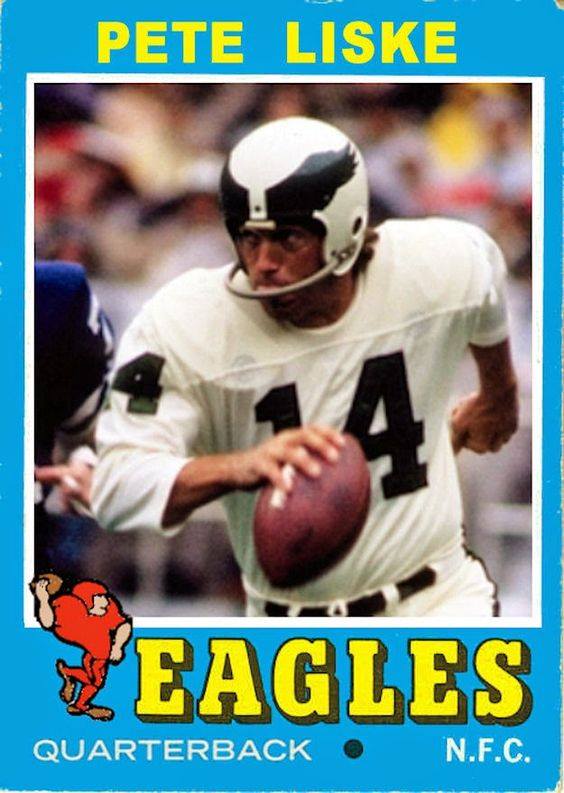



 This Game Is Over, Salvucci Sez